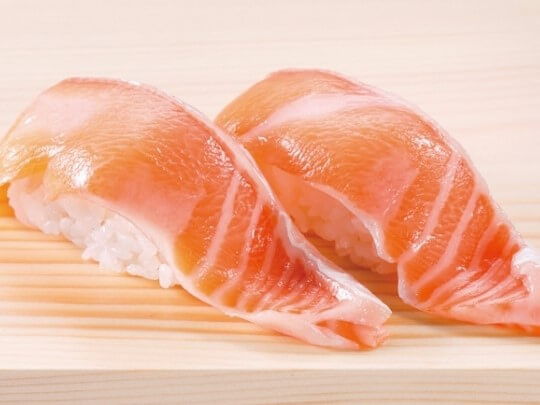
 You probably already know this, but “toro tuna” is not the name of a type of fish. “Toro” is the name of a fatty part of the tuna. The fat content and attributes of the belly side of the tuna are completely different from that of the dorsal side. Toro is the name of the part near the head, mostly on the belly side.
In the same way, there is no fish called “toro salmon”. Just like tuna, “toro” refers to the fatty part on the belly side of the salmon. It is also called “harasu” in Japanese. This is how the word is used at some scrupulous sushi restaurants. This description of “toro salmon” is correct.
Most salmon used at conveyor belt sushi restaurants is either trout salmon or Atlantic salmon. The reason this salmon can be served at the cheap price of US $1 or $2 per plate (2 pieces of sushi) is that these particular fish are all farmed and are available in bulk quantities from overseas. This salmon is mainly imported to Japan from Norway, Chile, Scotland and Canada.
Actually, the popular “toro salmon” topping is made from these imported items and the fat content is three times that of wild salmon. Feeding farmed salmon plenty of solid compounded feed that is high in protein and high in fat, turns the entire body to toro.
Salmon, which are born in freshwater and migrate downstream to the sea are called “sea-run fish” and they may be farmed in either seawater or freshwater. Trout salmon is “former” rainbow trout that was raised in a fish cage in the sea. In the wild, the sea-run rainbow trout grows up to 1 m in length, its body turns silver and the meat takes on a red color. The wild version of these are called “steelhead” and fetch a high market price, so they are not used in conveyor belt sushi restaurants.
Just like other aquaculture, salmon farming faces some difficult issues. It may surprise you that salmon is actually a white fish, originally. In the wild, the salmon meat gets a red color from feeding on crustaceans such as crab and shrimp that contain the red pigment astaxanthin. However, in the fish cages where the salmon are surrounded by nets, the food chain is also restricted. The compound feed would be plenty if the goal was only to raise bigger fish, but that results in a grey color or light yellow meat that doesn’t even resemble the salmon pink (orange?) that everyone wants and they don’t sell.
Therefore, when making the solid compounded feed, artificial coloring is mixed in. One of the colorings is called canthaxanthin. This is a synthetic chemical derived from petroleum. There is a color chart with 10 different, detailed levels of red coloring and buyers can even indicate which color they would like and the farmers can achieve it. It’s kind of like an industrial product that is being manufactured. Japanese people prefer a dark red color for salmon in the same way they do for tuna, so the coloring for Japan’s market is adapted to that.
When light is shone on wild salmon, the red coloring looks faded, but the light makes farmed salmon that have been fed coloring, look brighter. Artificial coloring is a necessity in farmed salmon and this is true for the trout salmon and Atlantic salmon that are used as the ingredients for toro salmon as well. All of the farmed salmon in circulation have been colored in this way, so much so that it wouldn’t be surprising if the insides of their stomachs were stained red. The flamingos at zoos also get their beautiful pink feathers from these chemicals.
Trout salmon is rainbow trout that has been farmed in the sea. On the other hand, rainbow trout farmed in freshwater is called Donaldson trout. Of all the large rainbow trout gathered at each location, those with small heads and fat bodies were selected and bred over many years to create this type. The objective of choosing a small head is to make more meat. They are characterized by their fast growth and while normal, farmed rainbow trout grow to about 30 to 40 cm, Donaldson trout grow up to nearly 1 m. The name is taken from the American who developed this variant.
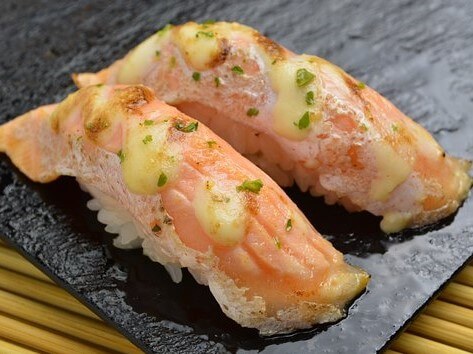 The Donaldson trout is farmed throughout Japan and is used as toro salmon and aburi salmon at conveyor belt sushi restaurants. Since they are supplied directly to the processor (of the salmon) from the farmer without going through the market, they may be sold cheaper than the import price. Just like the imported salmon, this farmed salmon is also fed artificial coloring. There are also already new variants improved from the Donaldson trout being bred. Trout made from breeding Donaldson trout females and steelhead males are called Donaldson steelhead, for instance. They grow even faster.
Ample use of the latest biotechnology has been made in salmon farming and some of these technologies include creating young fish without functioning reproductive organs, “triploids” which means increasing the size of the fish up to triple and “all female populations” where males are converted into females. The triploid fish grow large in correlation to the lack of energy exertion. The objective of all-female populations is to get more masuko (ovaries). Masuko is used for the ikura (salmon roe) at conveyor belt sushi, and since the fish that the roe is harvested from have an inferior flavor, they are used for aburi salmon. Now, there are even triploid, all-female farm populations. No wonder the restaurants can serve a plate (2 pieces) of salmon sushi for US $1.
The simple phrase, “toro salmon” contains so much meaning.
We hope this information will be helpful.

Revision date: March 8, 2021
 When you put food in your mouth, the components that are dissolved by your saliva are called extract components. Extract components include mainly free amino acid and inosinic acid as well as organic-based components such as adenosine triphosphate-related substances, creatine and trimethylamine oxide. Extract components are important components that make up the flavor of foods.
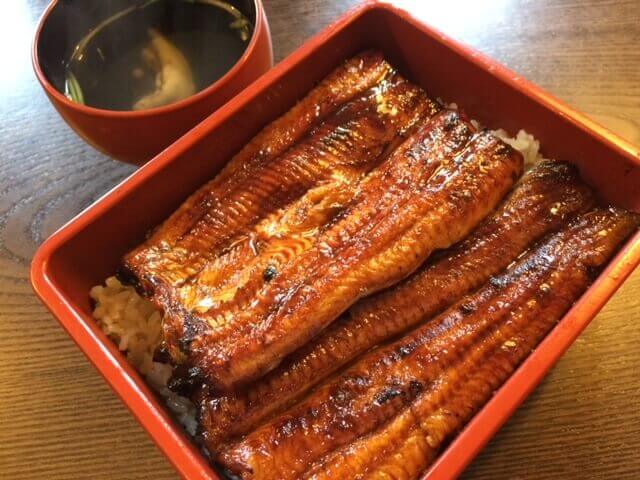 Unagi distributed domestically in Japan used to include European eel, but currently, it is mostly Japanese eel. In Japan, the overwhelmingly most popular way to eat unagi is “kabayaki”. Kabayaki mainly refers to a grilled fish cuisine in which unagi or anago (conger eel) is prepared by slicing open along the spine and removing the bones and guts, then skewering it, and grilling without any seasoning, steaming it (Some area, unagi is just grilled longer without steaming. This results in the unagi a little crispier and chewier) after that, and finally dipping it in a sauce made from a mixture of soy sauce, mirin, sugar, sake, etc.
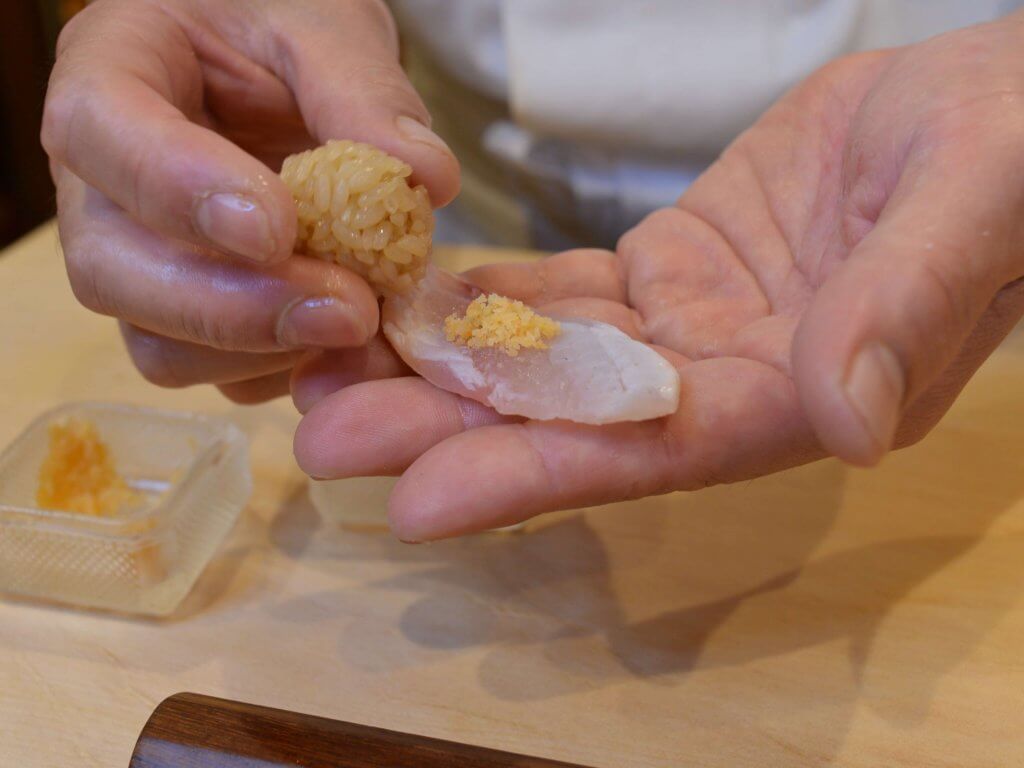 Oboro and Denbu look the same, and the ingredients are also pretty much the same. In other words, there are no clear differences between them, but what it is called differs depending on the restaurant’s policy and the locality. There are various theories for this, but there is no clear line distinguishing oboro and denbu.
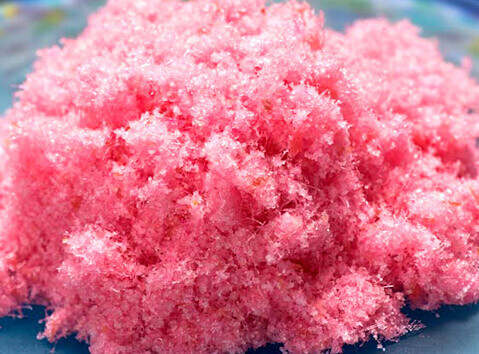 Denbu (田麩) is mainly boiled white fish that is then loosened and made into fibers, then seasoned with sugar, mirin, salt, etc., then roasted until the moisture is gone. Some are colored with red food coloring (called sakura denbu) while others are left as the brown color similar to tsukudani. The appearance is as if only the fibers of the original ingredients remain. This is why it was written with the kanji “田夫” (the literal meaning of kanji: rice patty+husband). The word “田夫” means “someone from the countryside” or “rough-cut” and refers to the way the fish is turned into a coarse form by pulling the meat apart. It is also used as a coloring for chirashizushi, futomaki (large sushi rolls), bento boxes, etc.
 On the other hand, Oboro (朧) is made by using a grinding bowl to break down the meat of shiba shrimp or white fish, then seasoning with sugar, mirin and salt before removing the moisture over low heat. Oboro is used for bara-chirashi, futomaki (large sushi rolls), etc., and is also sometimes used between the topping and shari (vinegared rice) in nigiri sushi. This gentle sweetness and the shrimp aroma are essential for Edo-style sushi. Making oboro is laborious work, so there are fewer and fewer Edo-style sushi restaurants that make their own oboro.
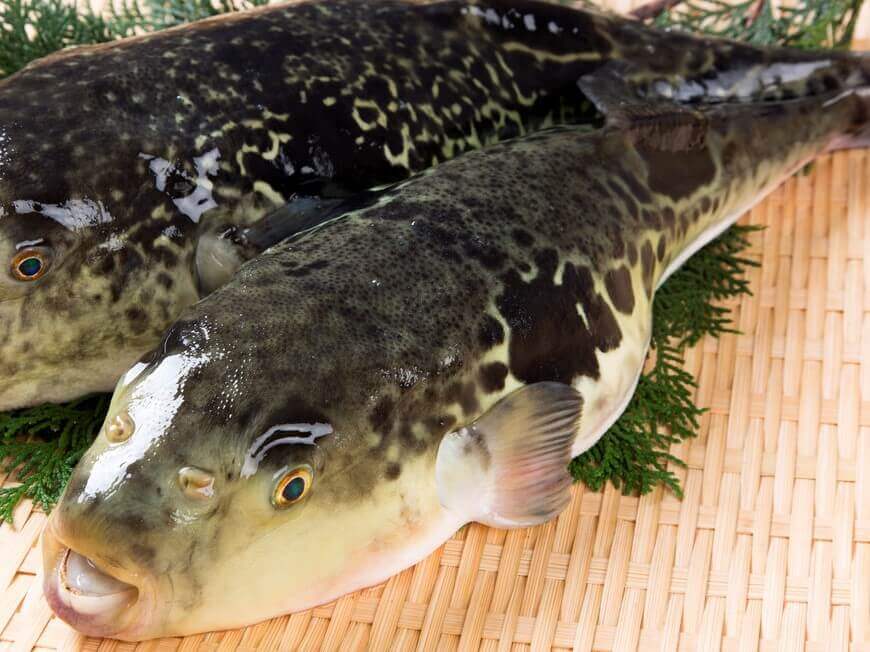 In most cases, Fugu (blowfish) poison is found in non-meat parts of the fish such as the liver, ovaries, stomach, intestine, skin and eyes. There are Fugu that do not contain poison in these parts, but most of the Fugu in the waters near Japan are poisonous. A mistake in preparations that allows the meat to touch the poison of the liver or ovaries results in immediate death. Therefore, the general rule is to only eat Fugu at restaurants with an expert licensed in Fugu preparation. Cases of poisoning by Fugu are nearly always a result of an amateur trying to prepare the fish.
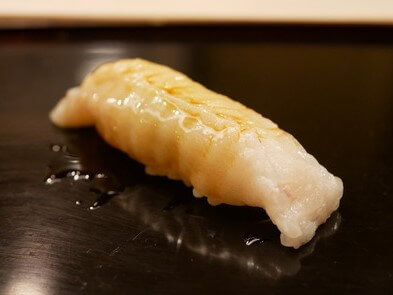 Engawa is the generally used name for the meat muscle that moves the soft ray of the dorsal and ventral fins of flatfish (such as hirame and makogarei). Most people in Japan think of the hirame version when they hear the word ‘engawa’.
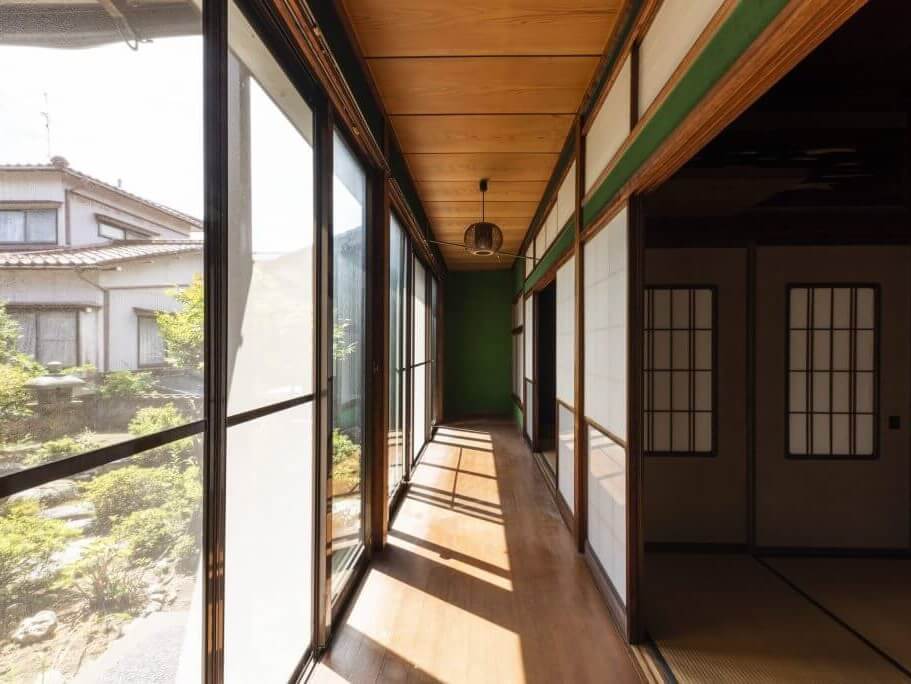 The name “engawa” comes from its resemblance to the unique veranda structure of Japanese-style homes. This veranda is called “engawa” in Japanese.
 It seems kanikama was invented in Japan. In the early 1970s, Sugiyo, a fish paste manufacturer, in a failed attempt to developed artificial jellyfish, ended up with a product that had a texture exactly like crab and shifted development to that instead.
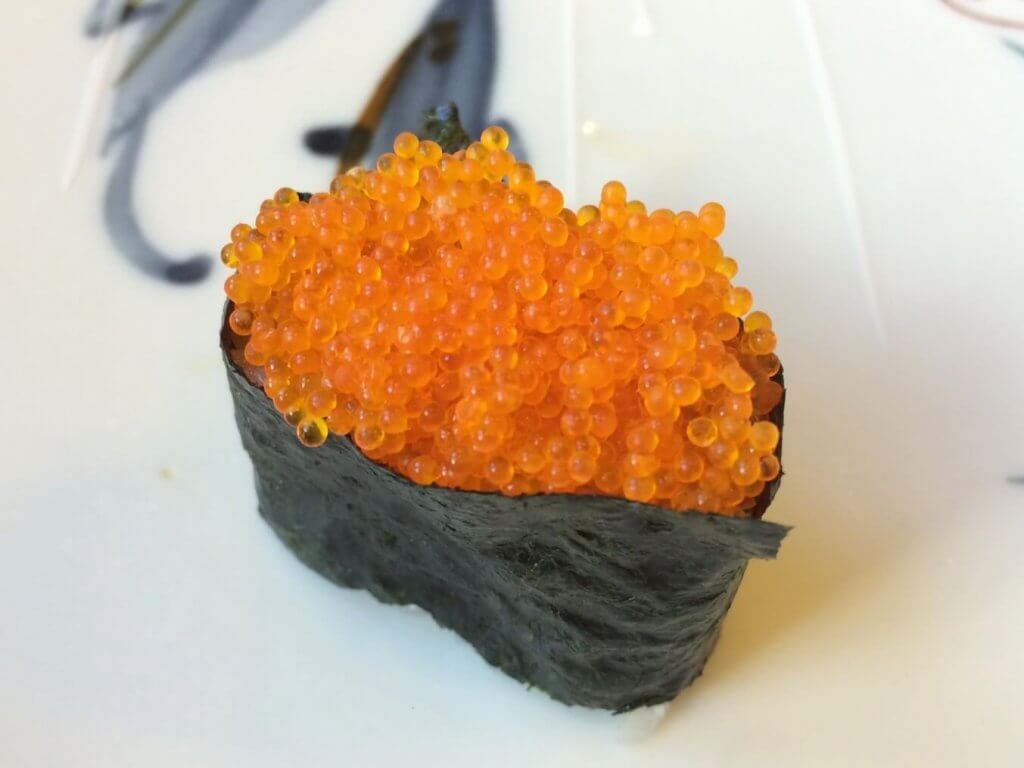 The tiny red balls around the outside of the rice on California rolls are tobiko (飛び子). Specifically, they have salted roe of flying fish and are known for the plump, crunchy texture. This crunchy texture comes from the skin, which is relatively tough, even compared to other fish eggs. As the roe is made up of small eggs of only 1 to 2 mm, each one bursts as you bite, without leaving the outer skin in your mouth, so you can enjoy a nice texture that you won’t find with any other fish roe. Unlike the orange-colored tobiko sold in stores, natural tobiko has a pale golden color with a sense of transparency. Therefore, some processors have dubbed it “golden caviar”.
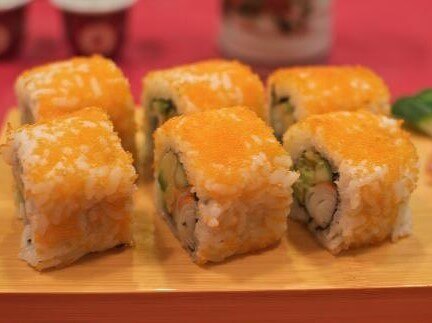 On the other hand, an orange-colored tobiko is often seen at conveyor belt sushi restaurants, etc., but this is the roe of a fish called capelin (カペリン), which is similar to shishamo smelt. A salted version of this is used for sushi rolls in the US and other places, where it is called masago. Compared to tobiko, the grains are smaller and the texture is a bit chewier. It is mainly rich in EPA (Omega-3 fatty acids) and collagen.
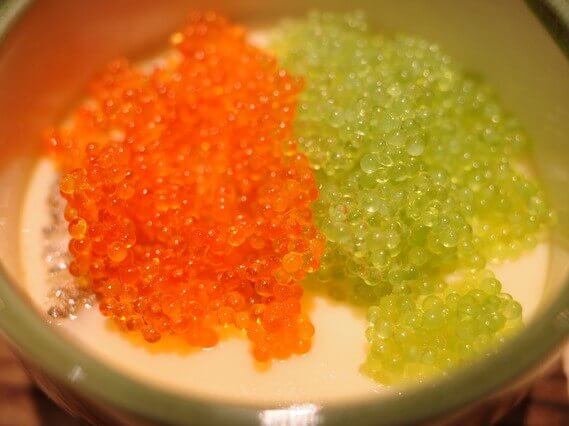 Finally, we’ll let you in on a not-so-pleasant secret. Flying fish and capelin roe is actually a light yellow or beige color. However, you’ll find it in bright red, orange, yellow and lately even green or black. Of course, these are colored by either natural pigments or synthetic coloring. Furthermore, tobiko is sometimes mixed with the cheaper capelin or herring roe. Unfortunately, food fraud is common in seafood products that are consumed in high quantities.
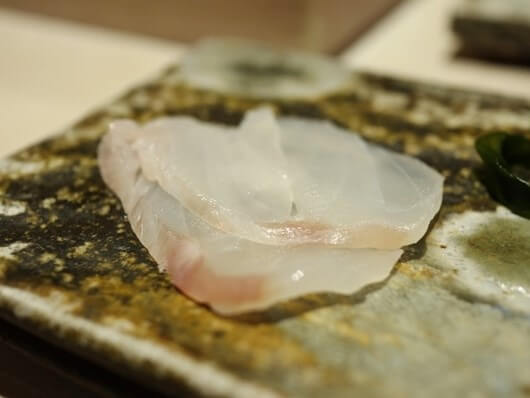
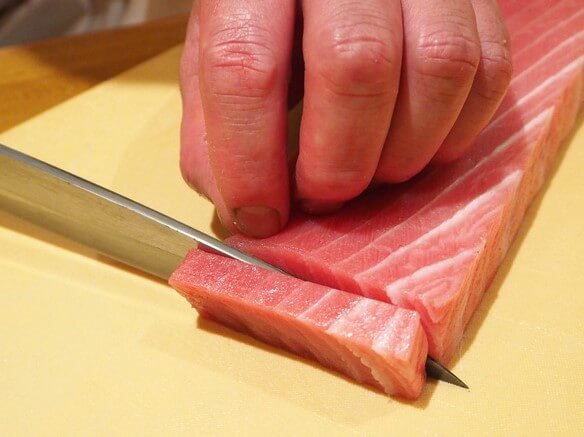
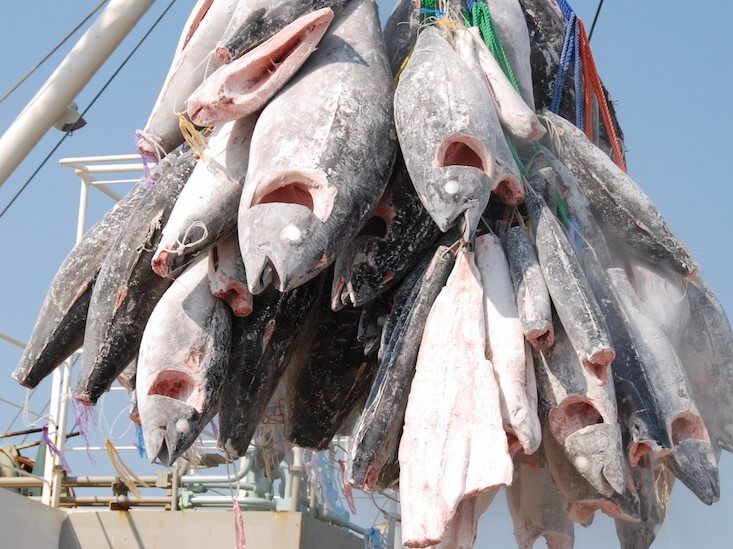 Once tuna caught in the open sea is processed by draining its blood on the ship, it is flash-frozen at ultra-low temperatures (-60℃). Ultra-low temperatures stops the enzymatic hydrolosis of protein, oxidation of fat and cultivation of microorganisms so it can be stored over a long period of time. The process can prevent discoloration for over two years and maintain a freshness worthy of being served as sashimi. Therefore, skillful sushi restaurants mature the thawed tuna in the refrigerator for about one week to attain the perfect balance of umami and change in color.
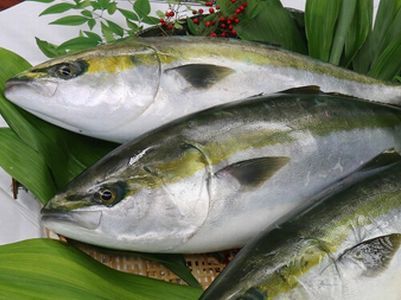 In the United States and other countries, “
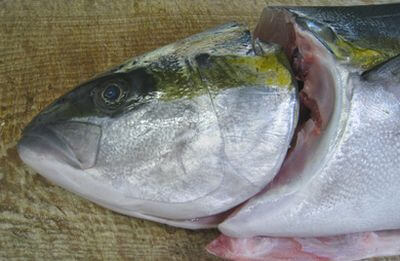 As an aside, three cousins (closely related species) of buri are often used as sushi toppings in sushi restaurants. In the Fish Name Dictionary, the translations of these cousins are Goldstriped amberjack (
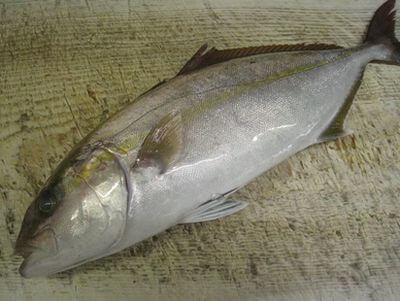 I’m sure you’re interested in the price, and while the price of the seasonal winter buri varies, it is generally around $10-20 per kilogram. Since there is very little distribution of hiramasa, the price is said to be about double that of buri. The price of
  Why is only tuna brought into certain ports high-priced, even though all of the tuna is caught in the seas near Japan? This is because the level of stress caused to the fish when it is caught has a huge impact on the quality, including taste, color and texture. In other words, the same fish may be delicious or taste unpleasant depending on how the fisher handles the fish directly after catching it. Naturally, everyone ends up wanting the fish from the ports with fisherman who are skilled in this practice*. Furthermore, it is individuals who process the fish. The quality changes drastically depending on who caught it.
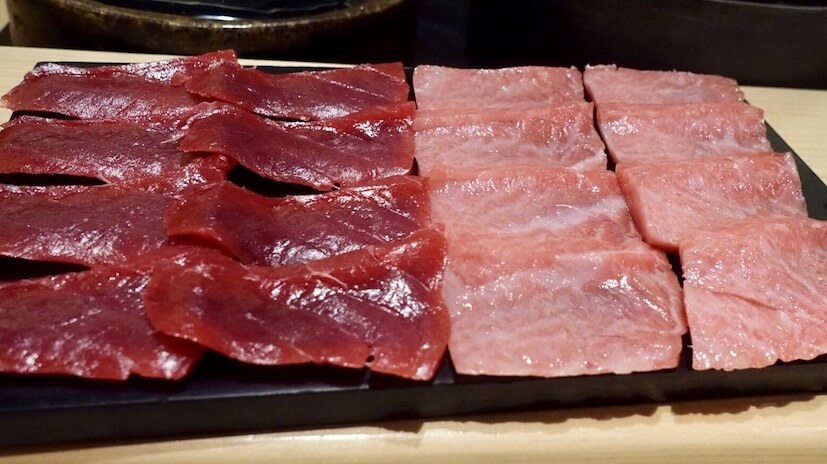 However, sushi chefs will remove the topping from the refrigerator and leave it standing out for a while (in the case of tuna, the fat will melt at around 23℃). They do this because if the topping is cold, it becomes difficult to taste the essential nature of the fish. The temperature of the shari is best at human skin temperature (around 36℃) to maximize the taste and sweetness of the rice. However, the ideal temperature differs very slightly depending on the topping.
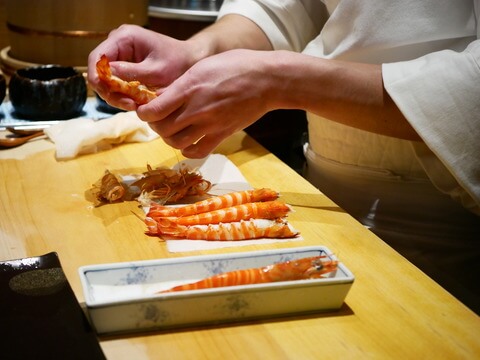 For example, conger eel which is often lightly grilled or prepared in another, similar way, should have a slightly higher temperature (around 42℃) than the shari, and kuruma prawn, which are boiled, should be the same temperature as the shari.
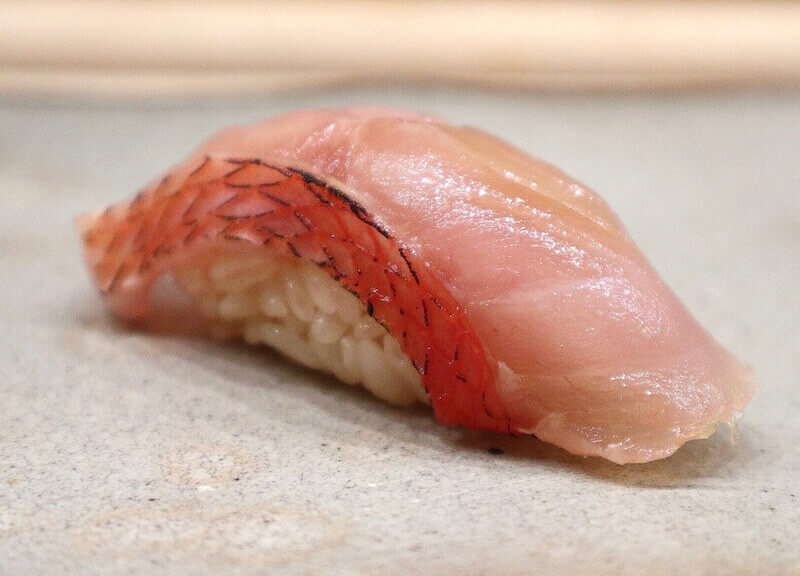 No one is more sensitive to the changing of the seasons than sushi lovers. This must be because the taste of sushi toppings is directly tied to the seasons. There are terms to describe this such as Hashiri (early season), Sakari (in-season) and Nagori (late season), and using these words to understand what state the sushi topping is it allows you to grasp and enjoy the various different flavors. There is nothing that says a sushi topping is less delicious because it has a lower fat content.