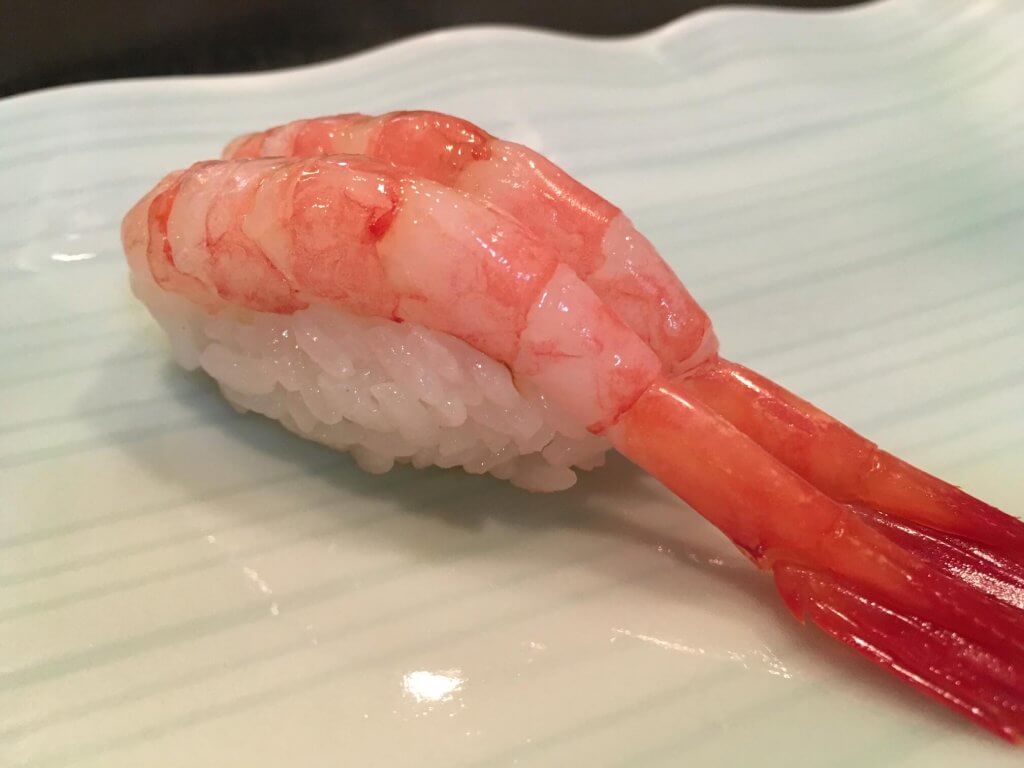
 It goes without saying, that each type of fish has its very own scientific name. However, in places like the Toyosu Fish Market, there are seafoods that end up sharing a name.
The official Japanese name of ama ebi (sweet shrimp) is “Hokkoku Akaebi” (scientific name: Pandaluseous Makarov).
In Japan, ama ebi lives naturally along the Sea of Japan coast and the coasts of Hokkaido, and the ama ebi sold at Toyosu market is caught from Toyama prefecture and northward to Hokkaido and southward. When made into nigiri sushi, it is harmonious with the acidity of the vinegared rice and the thick sweetness is irresistible. It really lives up to its “sweet” name.
However, what dominates the Toyosu Market is frozen shrimp of the same pandalidae family, called “Honhokkoku Akaebi” (scientific name: pandalus borealis kroyer) from Iceland and Greenland.
This is distributed as “Ama ebi” at the market, but strictly speaking it is a different type of shrimp. As far as appearance goes, it is impossible to tell the difference and they say that even the flavor is the same.
The majority of ama ebi used at conveyor belt sushi is produced in Greenland and imported to Japan through China. The reason for this import circumvention is that the processing to turn the shrimp into ready-made sushi toppings is done using inexpensive labor in China. The frozen ama ebi is thawed in China, processed (head, shell, etc., are removed) and then frozen again. Of course, this process diminishes the freshness of the fish. Preservatives are used to help prevent this. For example, pigment fixing agents are used in order to reduce discoloration from fading. Furthermore, acidity regulators and antioxidants are used to prevent changes in the quality and color of the meat. Ama ebi is stored in packs of 50, imported en masse to Japan, and can be used for sushi or sashimi immediately upon thawing.
As this ama ebi caught in the North Atlantic Ocean is considerably cheaper than domestic ama ebi, the reality is that conveyor belt sushi wouldn’t survive in Japan without these imports.
We hope this information will be helpful.

Revision date: September 1, 2021
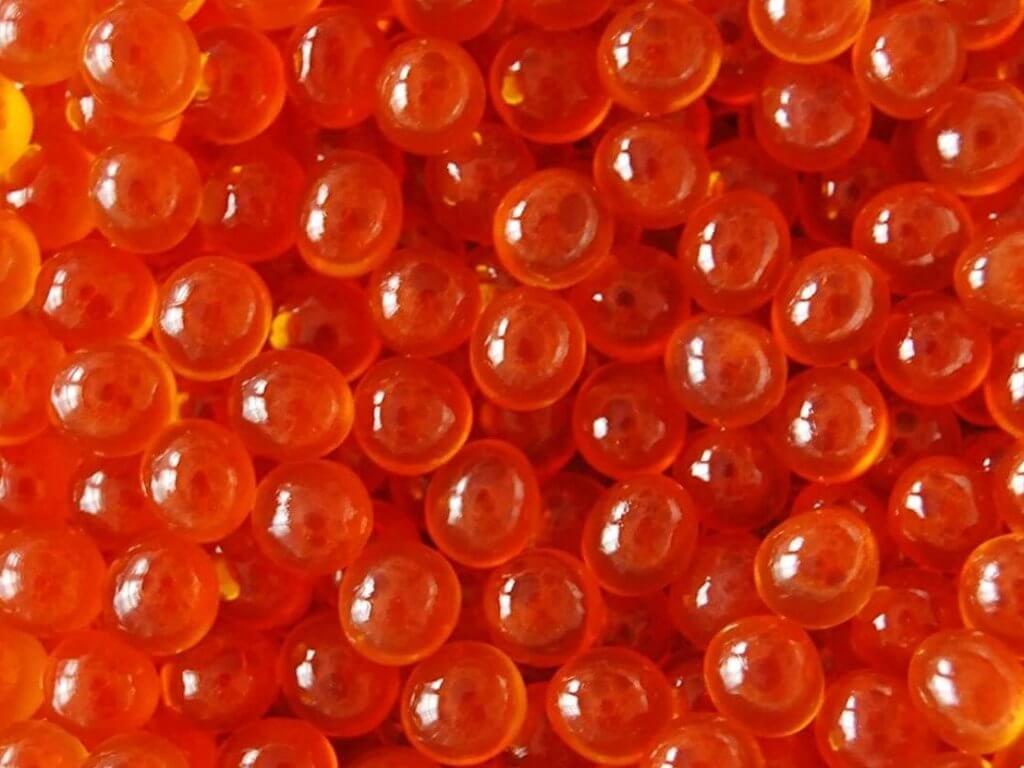 Not to belabor the point, but the following is dependent on the following. In Japanese salmon is referred to as “鮭” (sake/salmon) or “鱒” (masu/trout). The characters look different, but they are part of the same family and there aren’t clear biological categories to separate them into. Incidentally, in English the type that makes their way into the sea are called “salmon,” and those that remain in freshwater their entire lives are known as, “trout.” They are all considered to be part of the salmon family. Now, foreigners who know about Japan may imagine Japanese sake (the alcoholic beverage) when they hear the word “sake” so we spell sake/salmon as “shake”, which is close to the sound pronounced by Japanese people.
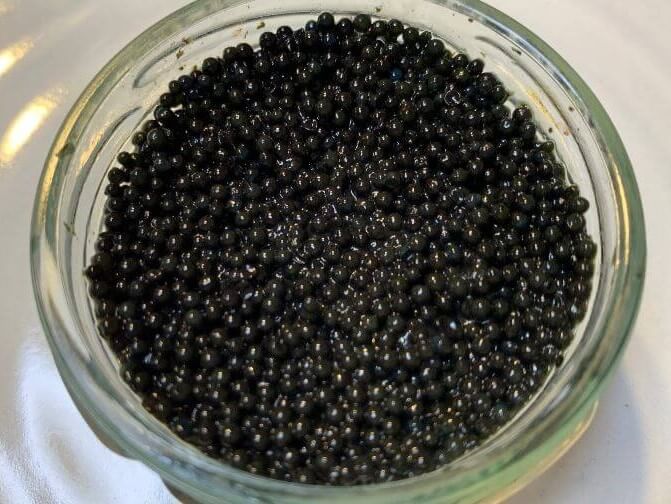 Lumpfish roe is sold as a substitute for caviar. The size of each egg is about 2 mm in diameter and it is colored with squid ink. This gives it a taste and appearance similar to caviar. The market price is an astonishing USD $5 per 50 g.
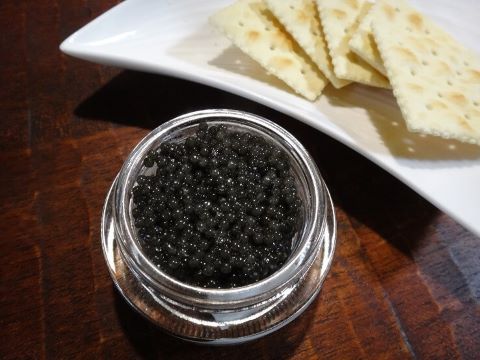 First, place the caviar on a cracker. Fake caviar (made of Lumpfish roe) has added color, and this color will bleed onto the cracker within about 30 minutes. However, the color will not transfer to the cracker from real caviar.
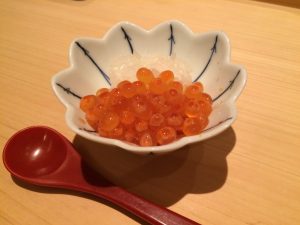 The natural salmon roe season is the autumn. Does this mean that most of the roe eaten during the off-season is artificial Salmon roe. Not necessarily. As stated in his biography, even at the famous sushi restaurant Sukiyabashi Jiro, frozen roe is thawed as necessary.