One of the pleasures of sitting at a sushi counter is watching the sushi master work his craft.
He holds the topping between the index finger and thumb of his left hand while simultaneously grabbing the shari (vinegar rice) with his left hand. He gently squeezes the shari and then moves the topping from his left hand to the top of that shari in a fluid motion. This entire process of shaping the shari to the finished piece of sushi takes less than six seconds. Every movement is precise and purposeful.
However, no matter how many pieces the chef makes one after another, you’ll never see a grain of rice stick to his hands. If you or I were to make even one piece of sushi, our hands would be covered in rice. So why doesn’t it happen to them? Their hands don’t look oiled. Perhaps sushi chefs have especially smooth or slick hands compared to us average Joes?
Of course not. This is actually thanks to the vinegar.
The chefs keep a bowl of vinegar close by, which they constantly use to wet their hands. This procedure is called “Tezu” or vinegared water, which both disinfects the hands and cools their palms. When the vinegar evaporates, it takes the heat from the hands with it.
Normally hands reach temperatures of 33-34 degrees Celsius (91-93 degrees Fahrenheit), but sushi chefs cool their hands to approximately 30 degrees Celsius (86 F). This transfers the heat from the hands to the shari, keeping it from getting sticky. In other words, not a single grain of rice sticks to their hands.
We hope this information will be helpful.

Revision date: March 19, 2018
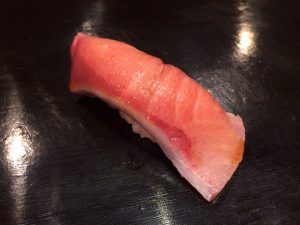
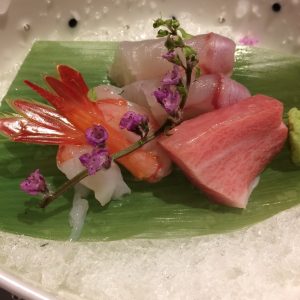 Thicker cuts of fish are used for sashimi than for sushi. Depending on the restaurant, the equivalent of three pieces of sushi may be used in one cut of sashimi. In other words, two pieces of sashimi is the same as six pieces of sushi. At a restaurant where one piece of medium fatty tuna sushi is priced at JPY 1000, simple arithmetic prices medium fatty tuna sashimi at JPY 6000. Just a small order of assorted sashimi often costs more than JPY 10,000.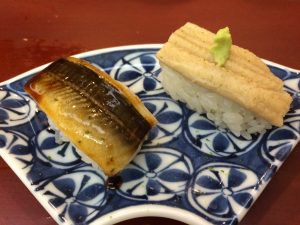
 Many overseas visitors who aren’t used to eating fish have an aversion to
 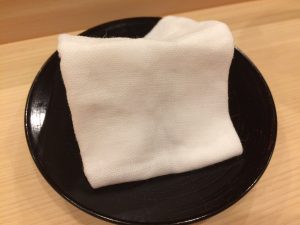 Sushi was originally a food eaten with your hands. Even, for example, if you are in a prestigious sushi restaurant in Ginza, you can still eat with your hands. You can actually use your hands to eat the ginger too. Restaurants that prefer you to eat with your hands will provide an extra,
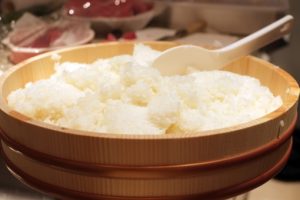 From the end of the Edo period through the Meiji period, rice was cooked using firewood and a pot. It is not easy to get the fire at the right temperature and the rice has to be cooked to the same texture regardless of where it came from or the size of the grains, so at the time the task required a skilled chef. Therefore, there were