 Even Japanese people can be overwhelmed by the somehow special atmosphere when they sit down at the sushi counter. This continues even when starting to eat. Other customers are concentrating on eating, quietly. You kind of get the feeling that if you utter anything, you will be asked to leave. If you don’t end up mustering up the courage, you just end up paying the high price for your meal and going home without much more to say of the evening.
Eating sushi at a counter is not inherently this dull. So why do sushi meals so often end up this way? The problem is knowing so little about the sushi, and feeling like you’re the visiting team on the field.
For example, it is taboo for new customers to take the seat positioned directly in front of the sushi chef. This is a special seat reserved for regulars. Even if the seat is empty, a newcomer will be shown to a seat in the back. This is an unspoken rule.
Contrary to their countenance, most sushi chefs are actually friendly and experts in the art of conversation. They especially value the back and forth with regular customers. For example, they have a keen memory, and can reiterate to the customer that their last visit was on the way home from a baseball game and they ordered a second helping of Chutoro fished in Oma. Of course this pleases many customers. A master sushi chef prepares sushi while standing in front of the customer. If there was to be no conversation with the customer, they can make the sushi back in the kitchen and have it served. Sushi restaurants are a place for conversation.
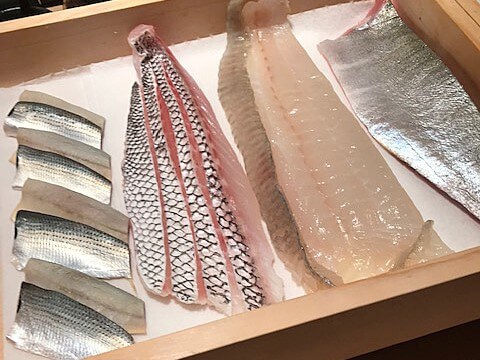 The customer ends up not remembering which fish they ate. For example there are very few people who can name the order of the 15-piece Omakase course they ate. You may be sure you ate tuna. But where was it caught? Was it the belly side or the back side? How long had the fish been matured? To be a bit more frank, how much did it cost? If you ask the chef these questions, next time you visit, you’ll be able to compare different taste based on the fishing location. Knowing the difference in taste based on the part of the fish, and difference in flavor depending on where it was procured, and different taste depending on the preparations will certainly improve your sushi literacy remarkably. It will also lead to a better awareness of your own taste preferences.
But there are limitations to the time allowed for personal conversation. For example, in a normal 2-hour Omakase course, there may be five minutes or so available for conversation. It might not sound like much, but that is also the amount of time allocated to regular customers. Newcomers often can’t find a time to get a word in and end up with only the initial greeting, which takes about 10 seconds.
Of course that’s for Japanese customers who speak Japanese. What about foreign customers who cannot speak Japanese? First of all, conversation is impossible, so this cuts the enjoyment factor of the sushi restaurant in half. But the sushi is delicious, right? Perhaps, but you’ll end up satisfied with the small-world view cultivated for you by the media, limited to whether or not the fish is fatty, or if the meat is fresh and firm. This is something you can experience anywhere that sushi is served in the world.
What we offer is a totally different experience.
You get a seat in front of the master sushi chef, a knowledgeable interpreter is seated by your side, and the Omakase show is presented right in front of you. The obliging chef explains each piece of sushi as you eat with a gentle demeanor. He will also answer any questions you think of on the spot. You won’t be able to say that you don’t know what you ate. We prepare a translated list of your Omakase menu. You are also welcome to take pictures whenever you’d like to preserve the enjoyable memory. All you need to do is forget time and immerse yourself in the Edo-style sushi, one of the staples of Japanese food culture.
We hope this information will be helpful.

Revision date: November 27, 2019
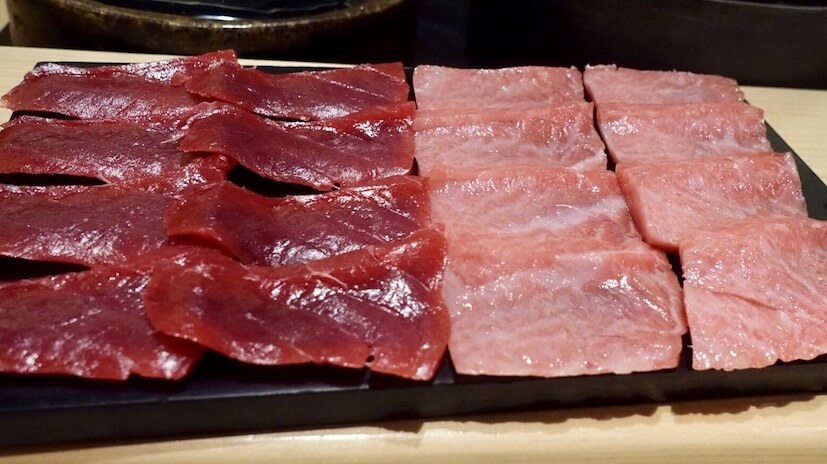 However, sushi chefs will remove the topping from the refrigerator and leave it standing out for a while (in the case of tuna, the fat will melt at around 23℃). They do this because if the topping is cold, it becomes difficult to taste the essential nature of the fish. The temperature of the shari is best at human skin temperature (around 36℃) to maximize the taste and sweetness of the rice. However, the ideal temperature differs very slightly depending on the topping.
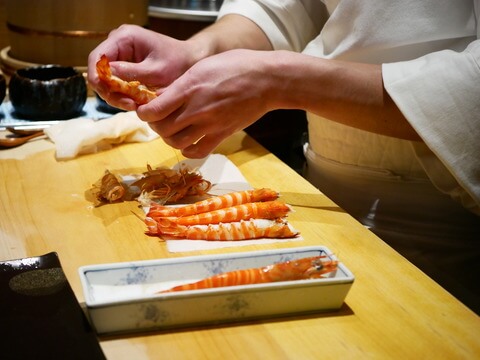 For example, conger eel which is often lightly grilled or prepared in another, similar way, should have a slightly higher temperature (around 42℃) than the shari, and kuruma prawn, which are boiled, should be the same temperature as the shari.
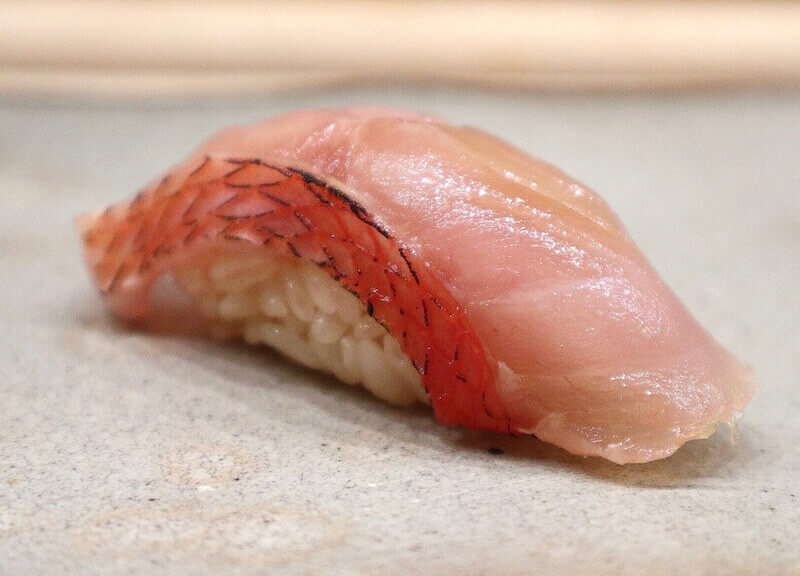 No one is more sensitive to the changing of the seasons than sushi lovers. This must be because the taste of sushi toppings is directly tied to the seasons. There are terms to describe this such as Hashiri (early season), Sakari (in-season) and Nagori (late season), and using these words to understand what state the sushi topping is it allows you to grasp and enjoy the various different flavors. There is nothing that says a sushi topping is less delicious because it has a lower fat content.
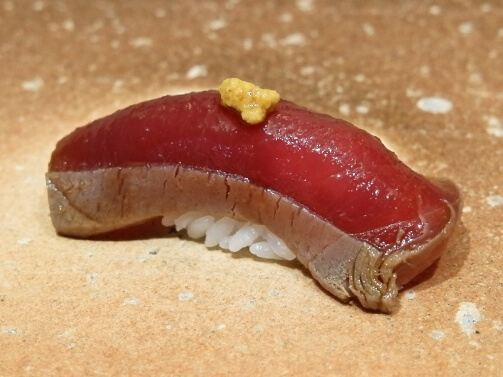 Japanese mustard refers to oriental (yellow) mustard and is a condiment with a strong spiciness. It is used for cooking Japanese and Chinese food. Western style mustard refers to white mustard, which has a more subtle flavor and fragrance and is not as spicy. It is used for sandwiches and sausages. Whole grain mustard is made by mixing white mustard with black mustard seeds and used for things like flavoring vinegar. Sushi chefs use Japanese mustard to offset the greasiness of fatty fish such as bonito and tuna.
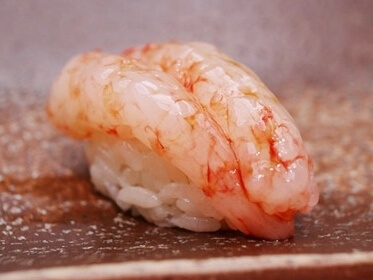 Fish seasons are categorized as the ‘catch season’ and the ‘flavor season’. The ‘catch season’ is the time when lots of fish can be caught and are cheap. Take Japanese Spanish mackerel (Sawara), for example, they approach the coasts during the spring to spawn and this is the peak season. This is the catch season. Once they’re about to spawn and their bodies fatten for winter, we’ve entered the tasting season. However, these seasons differ depending on the region, and may be longer or even happen twice a year.
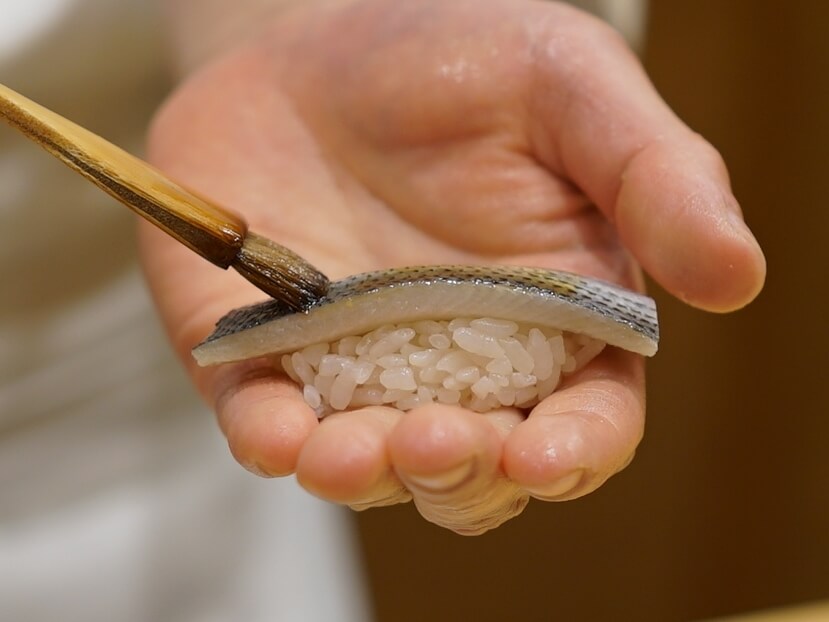 At high-class restaurants, the minimum required nikiri soy sauce is brushed on to the piece, but at restaurants frequented by the general public, customers dip their sushi in as much sauce (soy sauce that includes chemical seasonings) as they like. In fact, there is a gimmick here. The high-class restaurant provides an opportunity for their customers to eat sushi toppings in the most delicious state possible, but the restaurants for the general population allow customers to eat casually with sauce, a daily necessity. This changes how topping ingredients are selected. If the sushi is going to be dunked into the soy sauce, then the topping must have an appropriate fat content that won’t be overpowered by the soy sauce. Therefore, instead of a coastal tuna, a farm-fattened tuna with oily fat is preferred. It is often said that farm-fattened products are too rich, but it is also said that they have an impact that isn’t overpowered by the sauce they are enjoyed with.
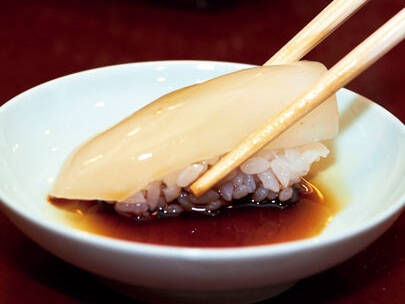
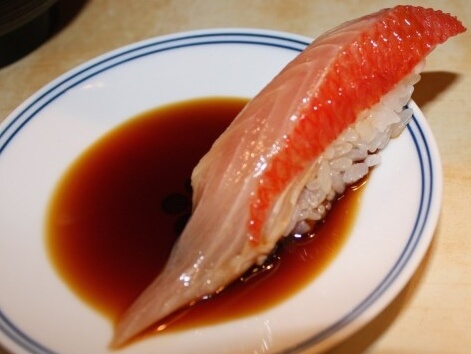 There is a sensor on the tongue that feels the degree of saltiness. This prevents us from eating too much of things that are extremely salty. Chemical seasonings confuse that sensor. The chemical seasoning palliates the degree of saltiness felt by the tongue. Even if you were to, for example, dunk your sushi into the soy sauce and chemical seasoning mixture, it won’t feel salty. If you eat sushi with the sauce, you can take in a high volume of sodium, which is a pleasure trigger for the human body, without feeling the saltiness on your tongue. In other words, it may be more accurate to say that with commoner sushi, you actually drink the sauce, not dip into it.
 The difference between common people who eat this sauce and foodies is a delicate nose, meaning their sense of smell. This sense is acquired through childhood experiences and repetition after becoming an adult. Tasting through sense of smell is a person’s food culture. The reason that the so-called celebrities, or the upper class made through business success, don’t have an appreciation for high-class sushi restaurants is because they don’t have this culture of distinguishing by smell, or the culture of feeling the seasons. Also, in order to target the upper-middle class clientele, it is important to use strong flavors and give a performance that is easy to understand, while worrying about details is not necessary. That is why the obvious show of using a burner for searing is popular.
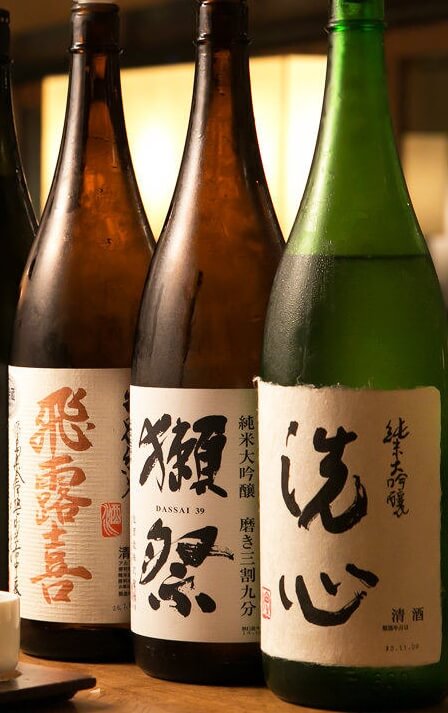 There is a theory that when pairing Japanese sake with cuisine, the two should complement each other. This means that one should complement the shortcomings of the other, and thus a harmony is achieved with the compatibility of the two pieces.
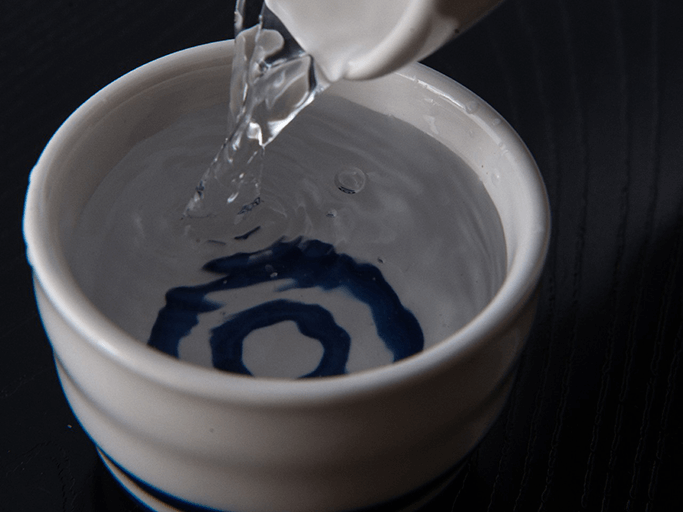 First, you should ask for a small amount of Junmaishu and Ginjoshu (or Junmai-Ginjoshu) recommended by your sushi chef. See the sensation they create in your mouth, whether there is a sweetness or a dryness, and note the fragrance and acidity. Immediately after eating a piece of sushi, try tasting the sake. Your impression may change a lot when paired with the sushi compared to the first sip. This is the true pleasure of pairing sushi and sake.
 Natural fish are part of the food chain and have concentrations of harmful substances. Since 2000 the amount of mercury found in fish has become an issue. The American Natural Resources Defense Council has said tuna is a fish that should be avoided if pregnant or planning to get pregnant. A more recent problem is the large amounts of micro plastics found in fish meat. This shocking phenomenon will likely be reported by research organizations at some point in time. If it does reach that extreme, then it will be better to avoid the danger of eating fish.
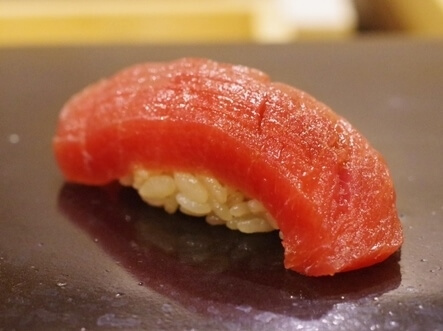
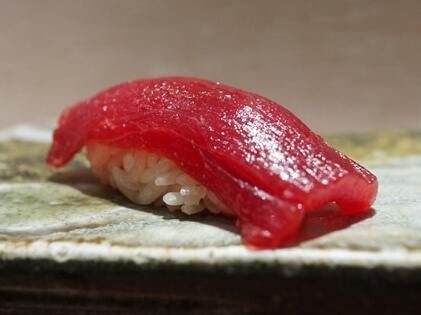 Tuna at top-end restaurants is light in flavor. Its Akami (red meat) has an indescribable acidity with a delicate harmony between the shari vinegar, the nikiri soy sauce, and wasabi. However, on the other side of the coin, it feels almost like a waste to eat it without a sense of luxury. Of course tuna with delicious akami, also has delicious fatty tuna (toro). And you’ll never get tired of it. It would be easy to polish off 10 pieces as a light snack. Contrary to popular belief, it’s not the high fat content that makes it so easy to eat. However, it is because of that popular belief that many people feel that the big chain store
  The other day I had a very interesting guest at Sushi University from America. I’d like to introduce them to you. It was their first time in Japan and they stayed in Tokyo for a week. They planned to see Asakusa, the Shibuya scramble crossing, Meiji Shrine, the robot restaurant and all the other usual tourist sites. However, the conversation all seemed to be focused on food.