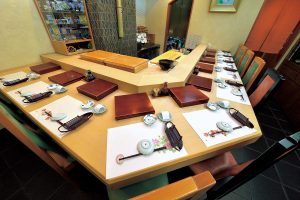
 Hier lernen Sie alle Benimmregeln, die nicht nur in Sushi-Lokalen, sondern in allen Gaststätten Japans gelten. Das Wichtigste ist wohl, auf andere Rücksicht zu nehmen sodass sich andere Gäste im Lokal nicht gestört fühlen. Rücksichtnahme – das ist wohl das Wesentliche im japanischen Leben. Bitte merken Sie sich die hier aufgeführten Punkte.
・Bitte kommen Sie nicht zu spät, halten Sie die Reservierungszeit ein.
・Bitte nehmen Sie den Ihnen zugewiesenen Platz
・Selbstverständlich ist es absolut unerwünscht, im betrunkenen Zustand laut zu reden oder andere Gäste anzupöbeln
・Aufdringliche Gerüche wie zu starke Parfüms sind nicht erwünscht
・Rauchen ist natürlich nicht erlaubt
・Wenn Sie Fotos machen wollen, fragen Sie bitte vorher den Geschäftsinhaber und die anderen Besucher um Erlaubnis
・Es gibt zwar keine bestimmte Kleiderordnung, doch es ist ratsam, sauber und dem Anlass entsprechend gekleidet zu sein.
・Telefonieren im Lokal ist nicht erlaubt
・Legen Sie bitte keine kantigen Gegenstände wie Ihr smartphone oder Ihre Uhr auf die Sushi-Theke, da diese aus empfindlichem Holz gemacht ist
・Sich all zulange mit dem Sushi-Meister zu unterhalten ist kein wirklich cooles Benehmen
・Bestellen Sie bitte nicht immer nur Sushi mit dem gleichen Belag
・Ein Ihnen vorgesetztes Sushi sollte sofort verzehrt werden. Optimal ist: Innerhalb von 10 Sekunden.
・Mit der Hand oder Stäbchen – Sie können Sushi essen, wie Sie wollen
・Um das delikate Gleichgewicht von Reis und Sushi-Belag optimal zu geniessen, sollte man am besten das ganze Sushi-Stück in den Mund stecken. In diesem Sinne ist davon abzuraten, den Belag vom Reisklumpen zu trennen.
・Fische und Meeresfrüchte aus natürlichem Fang schmecken in der jeweiligen Saison am besten. Wir empfehlen, saisongerechte Beläge zu wählen.
・Dippen mit zu viel Sojasauce ist nicht ratsam. Der Sushireis saugt die Sojasauce schnell ein und dann zerfällt der Reis in Klumpen. Zu viel Sojasauce stört auch den feinen Geschmack des weissen Fischfleischs.
・Eine geregelte Reihenfolge gibt es beim Sushi-Essen nicht. Sie können völlig frei wählen, mit welchem Sushi Sie starten und welchen Sie als nächsten essen.
・Ein echter Sushi-Kenner bleibt nicht noch lange sitzen, wenn er fertig gegessen hat. Sich nach dem Essen zu lange in einem Sushi-Lokal aufzuhalten, gilt in Japan als uncool.
We hope this information will be helpful.

Revision date: September 5, 2017
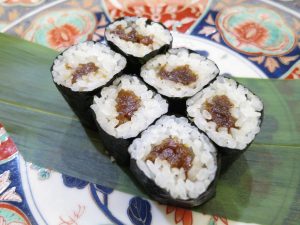 To maximize each flavor of toppings, have some pickled ginger or hot tea between different types of sushi for cleansing your palate. You don’t really have to stick to the specific order, though. It seems like having customers eat freely is the idea held in common by most sushi chefs. However, it is true that you won’t be able to taste the next flavor after eating something rather sweet. Japanese conger (Anago), Egg (Tamagoyaki), and Kanpyoumaki should be eaten at the end.
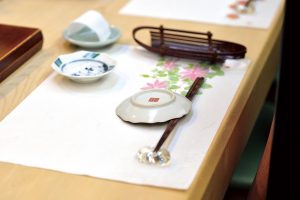 这里提到的各项事宜不仅仅是寿司店特有的礼仪,也适用于日本的所有饮食店。简单概括为一点,就是不影响到其他客人就可以了。请参考下列各项。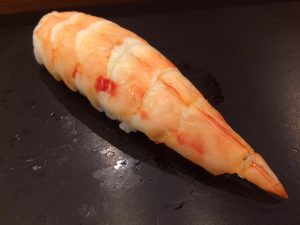
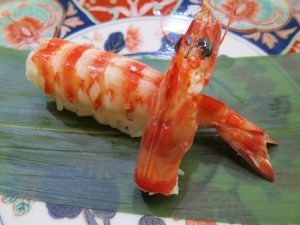 On the other hand, the
 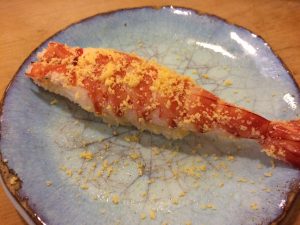 The old Edo-style sushi restaurants will also ferment the
 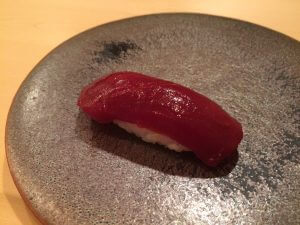 Zuke is one of the traditional Edo-style sushi methods. It is said that it was started in the Edo period to stop tuna from rotting when there were large amounts of the fish in the market. Now that there has been advances in refrigeration technology, it’s no longer necessary, but maturing the fish gives it a completely different taste and brings out its umami. Zuke is divided into two broad methods. Here we describe the characteristics of each.
 Fermented beverages such as sake and wine pair well with sushi. Sake is made from rice. So it only makes sense that this would pair well with sushi – also made with rice. It is also the only alcohol that eliminates the smell of fish and shellfish.
 However, neither red nor white wine goes well with herring or salmon roe. The iron specific to wine is said to contribute to the fishy smell of fish roe.
 In some cases a two-piece sushi dish you can get for JPY 100 at Kaiten-zushi (Conver belt sushi) can cost up to 2,000 for half the volume at a fancy restaurant. Many Kaiten-zushi establishments are part of large chains so costs are kept low by buying in bulk.
 While different from fancy sushi restaurants that serve various seasonal fish and edomaeshigoto, Kaiten-zushi has its own merits and offers sushi at a much lower price. It’s really up to the customer what they hope to get from their sushi experience.
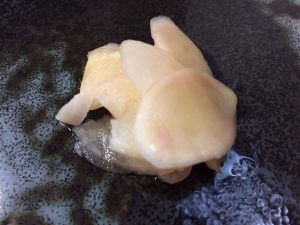 Gari is pickled ginger.
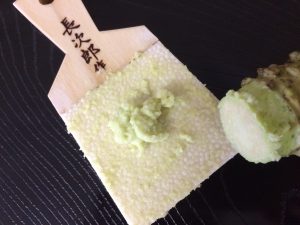 On the other hand, wasabi works by numbing senses of taste and smell with a stimulating spice so that the consumer doesn’t experience the fishy smell.