At high-class restaurants, the minimum required nikiri soy sauce is brushed on to the piece, but at restaurants frequented by the general public, customers dip their sushi in as much sauce (soy sauce that includes chemical seasonings) as they like. In fact, there is a gimmick here. The high-class restaurant provides an opportunity for their customers to eat sushi toppings in the most delicious state possible, but the restaurants for the general population allow customers to eat casually with sauce, a daily necessity. This changes how topping ingredients are selected. If the sushi is going to be dunked into the soy sauce, then the topping must have an appropriate fat content that won’t be overpowered by the soy sauce. Therefore, instead of a coastal tuna, a farm-fattened tuna with oily fat is preferred. It is often said that farm-fattened products are too rich, but it is also said that they have an impact that isn’t overpowered by the sauce they are enjoyed with.
There is a sensor on the tongue that feels the degree of saltiness. This prevents us from eating too much of things that are extremely salty. Chemical seasonings confuse that sensor. The chemical seasoning palliates the degree of saltiness felt by the tongue. Even if you were to, for example, dunk your sushi into the soy sauce and chemical seasoning mixture, it won’t feel salty. If you eat sushi with the sauce, you can take in a high volume of sodium, which is a pleasure trigger for the human body, without feeling the saltiness on your tongue. In other words, it may be more accurate to say that with commoner sushi, you actually drink the sauce, not dip into it.
The difference between common people who eat this sauce and foodies is a delicate nose, meaning their sense of smell. This sense is acquired through childhood experiences and repetition after becoming an adult. Tasting through sense of smell is a person’s food culture. The reason that the so-called celebrities, or the upper class made through business success, don’t have an appreciation for high-class sushi restaurants is because they don’t have this culture of distinguishing by smell, or the culture of feeling the seasons. Also, in order to target the upper-middle class clientele, it is important to use strong flavors and give a performance that is easy to understand, while worrying about details is not necessary. That is why the obvious show of using a burner for searing is popular.
Natural fish are part of the food chain and have concentrations of harmful substances. Since 2000 the amount of mercury found in fish has become an issue. The American Natural Resources Defense Council has said tuna is a fish that should be avoided if pregnant or planning to get pregnant. A more recent problem is the large amounts of micro plastics found in fish meat. This shocking phenomenon will likely be reported by research organizations at some point in time. If it does reach that extreme, then it will be better to avoid the danger of eating fish.
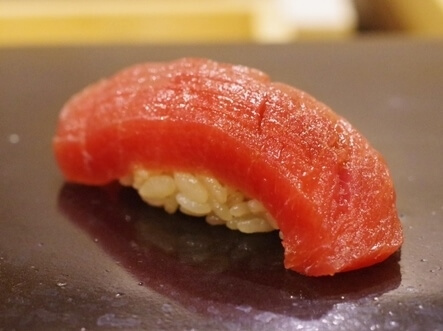
Tuna at top-end restaurants is light in flavor. Its Akami (red meat) has an indescribable acidity with a delicate harmony between the shari vinegar, the nikiri soy sauce, and wasabi. However, on the other side of the coin, it feels almost like a waste to eat it without a sense of luxury. Of course tuna with delicious akami, also has delicious fatty tuna (toro). And you’ll never get tired of it. It would be easy to polish off 10 pieces as a light snack. Contrary to popular belief, it’s not the high fat content that makes it so easy to eat. However, it is because of that popular belief that many people feel that the big chain store farmed fish with lots of fat is more delicious than luxury natural fish.
Before continuing, please read the exclusive articles in major media and research papers.
The red tide (algal bloom) frequently occurs off the coast of Chile and it is resulting a large amount of salmon deaths. In 2015 27 million salmon died in a mass event, of which 25,000 tons were powdered and then fed to the healthy salmon (according to the UK’s Guardian reports).
Chilean fish farmers are using large quantities of antibiotics to control fish diseases. They use 500-700 times more antibiotics than Norway does. 80% of antibiotics imported into Chile are intended for the fish farming industry. Faced with the risk of bacteria resistant to antibiotics emerging, as highlighted by the World Health Organization (WHO), the Chilean National Fish Service is calling for a reduction in the use of antibiotics. (Extract from Le Monde diplomatique Japanese edition)
The bright color of salmon is something that you would never see a long time ago, but is now commonplace. It is likely due to the Canthaxanthin pigment mixed into their feed. Salmon is in fact a white fish. The salmon that is caught in Japan is called “Shirozake” or white salmon and its flesh is not a pink before it goes out to sea. Once it is out at sea, it swims around consuming small plankton and crustaceans such as shrimp and krill. Its body then takes on a pink color due to the intake of natural coloring of Astaxanthin. This Astaxanthin has antioxidant effects and it is noted for playing a part in relieving fatigue and preventing aging. However, the synthetic pigmentation that creates the salmon pink does not provide the same health benefits.
The US Food and Drug Administration (FDA) gave approval for genetically modified salmon on November 19th, 2015. This genetically modified salmon is called “AquAdvantage salmon.” It grows faster than regular salmon and its body length is almost double. There are groups opposing the sale of this salmon, including US citizen group Center for Food Safety, the Japanese Seikatsu Club, and the European parliament. There are still many unknowns regarding the safety of this type of fish for human consumption, and a number of issues are still being debated. The discussion has been featured in “Nature” magazine.
Endosulfan is a type of organochlorine compound, like Dichloro Diphenyl Trichloroethane, Dicofol, Heptachlor, Chlordane, Mirex, Pentachlorophenol, and is known to be extremely toxic, but the EU approved Endosulfan for use as feed in Norway’s salmon farming industry in 2013.
Researchers analyzed the risk-benefit ratio based on levels of contaminants like dioxins, PCBs and chlorinated pesticides versus omega-3 fatty acid levels. While farmed salmon is higher in omega-3s, it is also significantly higher in these toxins (about 10 times) which can produce birth defects, lower IQ, and cause cancer. They determined the following based on origin of the salmon: “consumers should not eat farmed fish from Scotland, Norway and eastern Canada more than three times a year; farmed fish from Maine, western Canada and Washington state no more than three to six times a year; and farmed fish from Chile no more than about six times a year. Wild chum salmon can be consumed safely as often as once a week, pink salmon, Sockeye and Coho about twice a month and Chinook just under once a month.” (Extract from The Journal of Nutrition)
There is a saying, where there’s smoke, there’s fire. It is unlikely that big media outlet and research organizations would join forces to circulate incorrect information. Furthermore, this is not a problem that only affects certain countries like Chile or Norway. It should be considered as a problem for the entire farmed salmon industry.
On the other side of the debate, there are articles such as the following. Norway’s NIFES (National Institute of Nutrition and Seafood Research) sampled 13,180 farmed fish (of which 90% were salmon) and monitored them for medicines, substances that are prohibited by law, and other pollutants, publishing their report on August 17th 2015. In their latest report, it concluded that Norwegian farmed fish were safe and that illegal and undesirable substances were not observed to exceed standards. Further, it seems that they have confirmed decrease in most of the pollutants analyzed in the investigation.
But the fact is that, according to these articles, while the chemicals did not exceed standard values, they were certainly found to be present in farmed salmon. The other extreme would be to say that eating natural un-farmed salmon will not expose you to the potential risks from these types of chemicals.
However, that’s not really practical. The global production of farmed salmon is 2.5 million tons a year, approximately three times the 800,000 tons of naturally fished salmon. No matter what way you slice it, the option of farmed salmon isn’t going away anytime soon.
In the United States, Sea Bream is often called a Red Snapper. However, strictly speaking, this is not correct.
Biologically, Snapper is a generic term for all species in the snapper family (Lutjanidae). Over 100 different species of snapper inhabit tropical coastal waters. Red snapper is mainly fished in the Gulf of Mexico.
So, what is the fish that Japanese sushi restaurants call “tai”?
They say there are over 300 different species of fish with “tai” in the name, making up 10% of Japan’s fish. When we say “tai” in Japanese, we are referring to “madai” or red sea bream. Red sea-bream is categorized in the “madai” family (Sparidae).
Incidentally, relatives of the sea bream often served at sushi restaurants include red sea bream (madai), crimson sea bream (chidai) and yellowback sea bream (kidai). While “kinmedai” (Splendid alfonsino) and “amadai” (horsehead tilefish) have the name “tai/dai” in them, they are not part of the same family as “tai”. Splendid alfonsino is a type of deep-sea fish.
Red sea bream and red snapper look similar, but when served as sushi, their texture and flavors are entirely different. So if you come to Japan, please try and eat natural madai. There is no “zatsumi” (overpowering bitterness) and it has a slight sweetness to it. This is the taste of tai, known as the king of the white fish. Just for your own reference.
When you sit at the counter and order nigiri a la carte, they will come out in pairs.* There is nothing wrong with counting these in the regular Japanese way “ikko,” “niko.”
*It is said that nigiri-sushi in the Edo period was bigger than it is today, and too big to eat in one bite. In the Meiji period, the custom emerged of splitting this one big portion into two to make more easily consumed portions, and this is why it is common to get sushi in sets of two. However, nowadays making one piece of nigiri-sushi at a time is not very efficient. We think it’s actually easier for the sushi restaurant to make them in sets of two. Of course, you can order them one by one.
But the sushi restaurant won’t count them like that. Formally, sushi is counted in this way: Ikkan (one), Nikan (two).
We have absolutely no idea where the custom of using the “kan” counter came from. It’s also not clear when use of that counter for sushi started.
Of course, there are theories. For example, there is a theory that back at a time when a single unit of money was called “kan.” The price for one piece of sushi was around 1 ‘kan’, and the counting method gained popularity. There is another theory that one sushi roll was counted with the counter for roll “巻” (also pronounced “kan”), then a different kanji was used for it later. However, these are just theories that were created after the fact and the mystery remains unsolved.
Even if you ask the owner of a sushi restaurant, they’ll probably cock their head to one side, think for a moment, and tell you that the “kan” mystery may never be solved.
Sushi rolls wrapped in seaweed rolls are counted in units of 本 (hon/bon/pon) in the wrapped state, and when cut with a knife, the units change to 切れ (kire). While these units are fairly straight-forward for Japanese language speakers and easy to understand, only the enigmatic 貫 (kan) remains a mystery.
The original negitoro is made from medium fatty tuna or nakaochi* chopped up finely with a knife and then mixed with chopped green onions on top. But the tuna may be switched out with filler, leading to a variety in quality of the negitoro available.
First of all, the lowest in the ranking are the offcuts of tuna that can’t be made into sashimi (mainly Yellowfin or Albacore tuna) and this is mixed with vegetable oil and minced. The type of onion used is normally green onions. You can pick this type out because it will be whitish in color. This version is normally served at conveyor belt sushi.
The medium quality uses the nakaochi of cheap Albacore tuna or Swordfish.
High quality negitoro uses the nakaochi of Pacific bluefin tuna or Southern bluefin tuna. Sometimes the green onion sprout is then rolled up inside. If you have a chance to try negitoro in Japan, we recommend you try the top quality options without a doubt. One piece will probably cost around $15 USD. But that’s the price for the real thing!
Finally, let me introduce some negitoro trivia. There is a lot of flesh on the middle bone (spine) and the surrounding area for tuna and the like. This is called “nakaochi*”. Scraping the meat from this area surrounding the spine is known as “negitoru”, which is where the word “negitoro” comes from. In other words, the name “negitoro” is not actually from the words onion (negi) and tuna belly (toro).
What is negitoro like at Sushi restaurants?
Originally, the meat from the middle cut or in between the bones of the tuna was used for negitoro. In order to get meat from these parts, the chef would have to purchase an entire tuna, or buy the cut that includes the mid-ribs. However, both of these purchases are difficult for a single sushi restaurant, so now the chef chops the meat from the body with a butcher knife until it forms a paste that is sticky and smooth from the fat in the tuna. This paste is used for negitoro.
Kakushiaji refers to a technique where a single seasoning (For example, sugar, vinegar, soy sauce, salt, etc.) is added to a dish. The Kakushiaji contrasts with the finished dish’s flavor, and is added in an amount too small to notice when served. This produces a clear improvement in flavor.
Examples include adding a little salt to heighten sweetness, or adding a little vinegar to a simmered dish. Sometimes these combination of flavors can be quite surprising, like adding a touch of chocolate to a curry.
Umami describes the delicious taste of savory flavor essences. For many years, people held to the belief that humans can taste only four basic flavors (sweet, sour, salty, bitter) unitil a japanese chemist named Kikunae Ikeda discovered a fifth flavor (glutamic acid) in the early 20th century.
The main umami ingredients are glutamic acid in seaweed, inosinic acid in dried bonito and meats, succinic acid in shellfish, guanylic acid in shiitake mushroom.
Many ingredients contain a wide variety of umami essences. In combination, they create a synergistic effect which produces an even more potent savory flavor.
The ginger served in sushi restaurants is called “gari”. There are people who just chomp down the gari since it’s all free.
However, in certain prestigious restaurants where the gari is handmade, it does end up on the bill. This is because considering the time and ingredients that go into making the gari, the restaurant will be losing money if they don’t charge for it.
However, most sushi restaurants purchase their gari from companies that specialize in it. These mostly include pickling manufactures that have expanded to China or Southeast Asia and have factories there.
When made at these factories, large amounts of ginger is soaked in the stock solution, creating gari in bulk. The quality has improved greatly over the years, but often the fibers are crushed making it soggy, or the gari is stained from ume vinegar.
On the other hand, homemade gari and gari made in Japan is flavored with vinegar and salt while sugar is used sparingly as a subtle flavoring. Handmade gari is crunchy and chewy. The color is also the original pale yellow of ginger.
And during the fresh ginger season at the beginning of summer the price of fresh, domestic ginger jumps up to thousands of yen per kilogram. Since ginger has a high water content, it can be wrung out to reduce 1kg of ginger down to 300g. Making delicious gari by hand costs money. It is also a daunting task of making a year’s worth in advance. Once it’s done there has to be a refrigerator dedicated to storing only the gari.
When you put it that way, homemade gari is far more expensive than its imported equivalent. Providing homemade gari is one of the things that sets sushi restaurants apart from each other. Of course even if you’re not charged for the gari, eating too much will affect your sense of taste for the meal.
As far as I know, there are three ways “sushi” is written on sushi restaurant curtains in Japanese kanji characters: 鮨, 鮓 and 寿司.
Do you know the difference? Most Japanese people don’t know the answer to this question.
Broadly, in the Kanto area 鮨 is generally used while 鮓 is more common in Kansai. 寿司 is used commonly everywhere in Japan.
However, of the three, only 鮨 and 鮓 are seen in ancient Chinese literature. 鮨 was seen as a dictionary entry as early as the 5th to 3rd centuries B.C., and it’s origin is described as combining “fish” and “shiokara” (briny flavor) resulting in the term 鮨.
On the other hand, in A.D. 1st to 2nd century dictionaries, “鮓” appeared, and is explained to depict “a storage container for fish.” Toward the end of the second century 鮓 was used for the term “narezushi”.
But around the third century, the briny meaning of 鮨 and the term “narezushi*” written as 鮓 started to be used interchangeably. That is how the words were imported to Japan.
In Japan, the character “鮓” was often used in literature from the end of the Heian era to the end of the Edo era. Eventually the use of “鮨” was revived during the Meiji era (for unknown reasons). It was a natural transition that Kanto came to use “鮨” and Kansai came to use “鮓”.
Incidentally, the kanji “寿司” was created from the phonetics. Its use for celebratory occasions became commonplace throughout Japan.
*”Narezushi” is the primitive version of Japanese sushi. It means covering seafood with salt and then soaking in rice for a few years as a form of lactic acid fermentation, which brings out the acidity.
One important task of sushi chefs is going to Tsukiji (Toyosu) every morning, looking at fish with their own eyes and assessing the quality. Having a good eye is important in order to get the highest quality possible, but this is cultivated by experience. They are also constantly obtaining information from the fishmongers at the market regarding what the best fish of the season and their localities. It’s almost a game as to whether they can get high-quality fish at the optimum price everyday. The skills of a sushi chef start with this assessment.
Many regular patrons of sushi restaurants look forward to having casual conversations with the sushi chefs. It might be difficult to understand for visitors who don’t speak Japanese, but sushi restaurants are the only restaurants in the world that customers can speak directly with the head chef. If you don’t need conversation, then the waiter could just bring the sushi made back in the kitchen. Of course they also want customers to see the beautiful act of making sushi, but there is no particular reason that the sushi has to be made in front of the customer. The technical term for this is “Exposed Business,” meaning that the chefs are putting themselves on display for the customers. Did you learn something new?
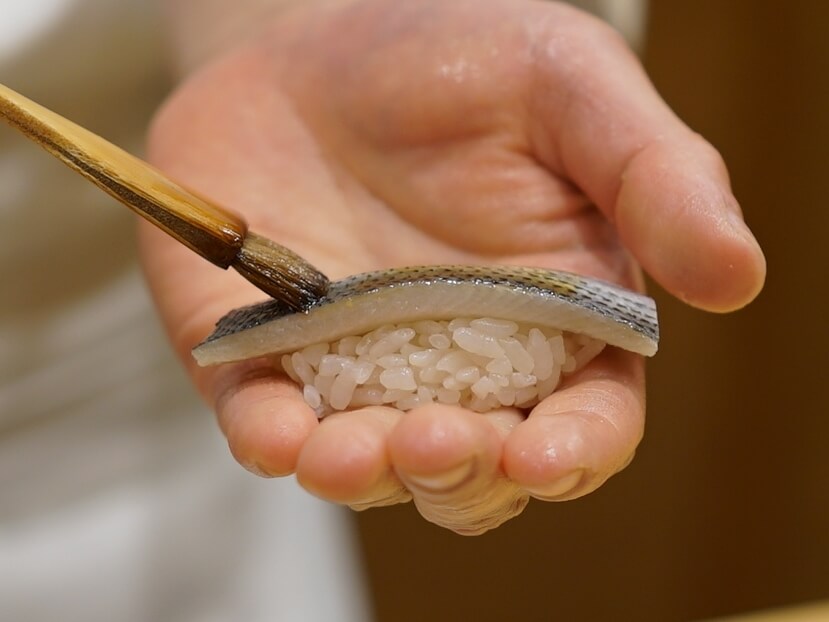 At high-class restaurants, the minimum required nikiri soy sauce is brushed on to the piece, but at restaurants frequented by the general public, customers dip their sushi in as much sauce (soy sauce that includes chemical seasonings) as they like. In fact, there is a gimmick here. The high-class restaurant provides an opportunity for their customers to eat sushi toppings in the most delicious state possible, but the restaurants for the general population allow customers to eat casually with sauce, a daily necessity. This changes how topping ingredients are selected. If the sushi is going to be dunked into the soy sauce, then the topping must have an appropriate fat content that won’t be overpowered by the soy sauce. Therefore, instead of a coastal tuna, a farm-fattened tuna with oily fat is preferred. It is often said that farm-fattened products are too rich, but it is also said that they have an impact that isn’t overpowered by the sauce they are enjoyed with.
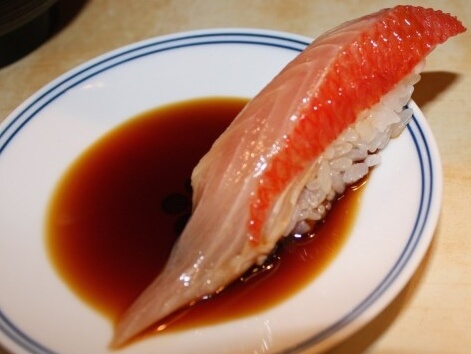 There is a sensor on the tongue that feels the degree of saltiness. This prevents us from eating too much of things that are extremely salty. Chemical seasonings confuse that sensor. The chemical seasoning palliates the degree of saltiness felt by the tongue. Even if you were to, for example, dunk your sushi into the soy sauce and chemical seasoning mixture, it won’t feel salty. If you eat sushi with the sauce, you can take in a high volume of sodium, which is a pleasure trigger for the human body, without feeling the saltiness on your tongue. In other words, it may be more accurate to say that with commoner sushi, you actually drink the sauce, not dip into it.
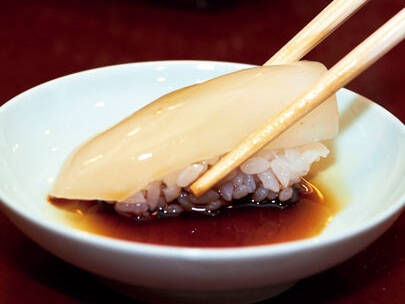 The difference between common people who eat this sauce and foodies is a delicate nose, meaning their sense of smell. This sense is acquired through childhood experiences and repetition after becoming an adult. Tasting through sense of smell is a person’s food culture. The reason that the so-called celebrities, or the upper class made through business success, don’t have an appreciation for high-class sushi restaurants is because they don’t have this culture of distinguishing by smell, or the culture of feeling the seasons. Also, in order to target the upper-middle class clientele, it is important to use strong flavors and give a performance that is easy to understand, while worrying about details is not necessary. That is why the obvious show of using a burner for searing is popular.
 Natural fish are part of the food chain and have concentrations of harmful substances. Since 2000 the amount of mercury found in fish has become an issue. The American Natural Resources Defense Council has said tuna is a fish that should be avoided if pregnant or planning to get pregnant. A more recent problem is the large amounts of micro plastics found in fish meat. This shocking phenomenon will likely be reported by research organizations at some point in time. If it does reach that extreme, then it will be better to avoid the danger of eating fish.
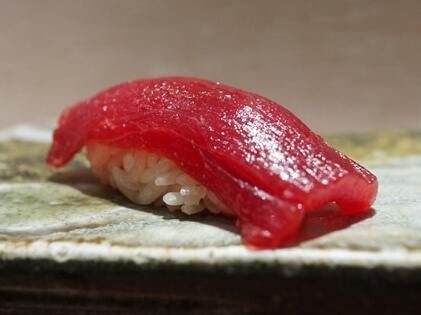 Tuna at top-end restaurants is light in flavor. Its Akami (red meat) has an indescribable acidity with a delicate harmony between the shari vinegar, the nikiri soy sauce, and wasabi. However, on the other side of the coin, it feels almost like a waste to eat it without a sense of luxury. Of course tuna with delicious akami, also has delicious fatty tuna (toro). And you’ll never get tired of it. It would be easy to polish off 10 pieces as a light snack. Contrary to popular belief, it’s not the high fat content that makes it so easy to eat. However, it is because of that popular belief that many people feel that the big chain store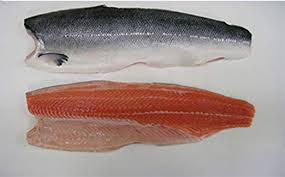
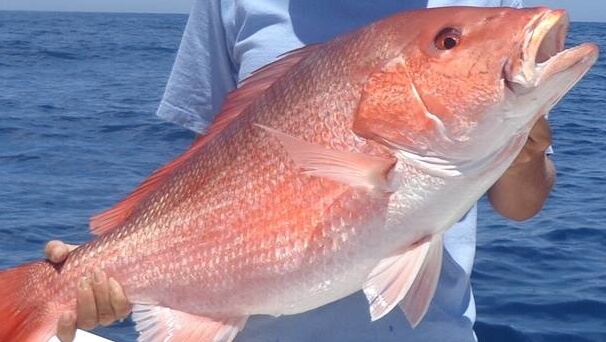 Biologically, Snapper is a generic term for all species in the snapper family (
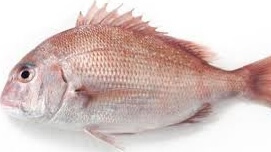 They say there are over 300 different species of fish with “tai” in the name, making up 10% of Japan’s fish. When we say “tai” in Japanese, we are referring to “madai” or red sea bream. Red sea-bream is categorized in the “madai” family (
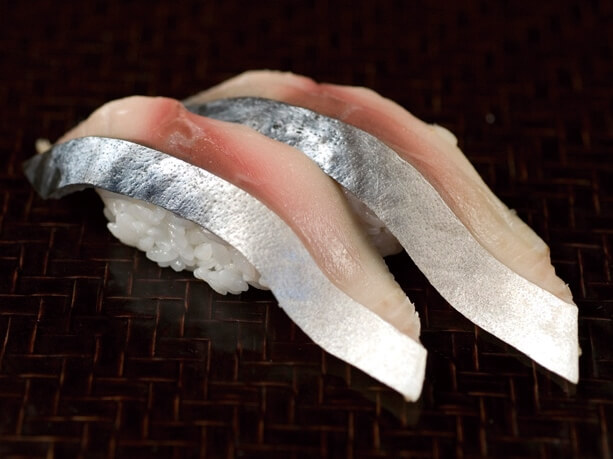 When you sit at the counter and order nigiri a la carte, they will come out in pairs.* There is nothing wrong with counting these in the regular Japanese way “ikko,” “niko.”
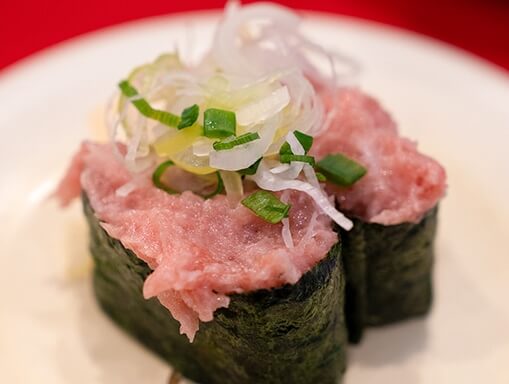 First of all, the lowest in the ranking are the offcuts of tuna that can’t be made into sashimi (mainly Yellowfin or Albacore tuna) and this is mixed with vegetable oil and minced. The type of onion used is normally green onions. You can pick this type out because it will be whitish in color. This version is normally served at conveyor belt sushi.
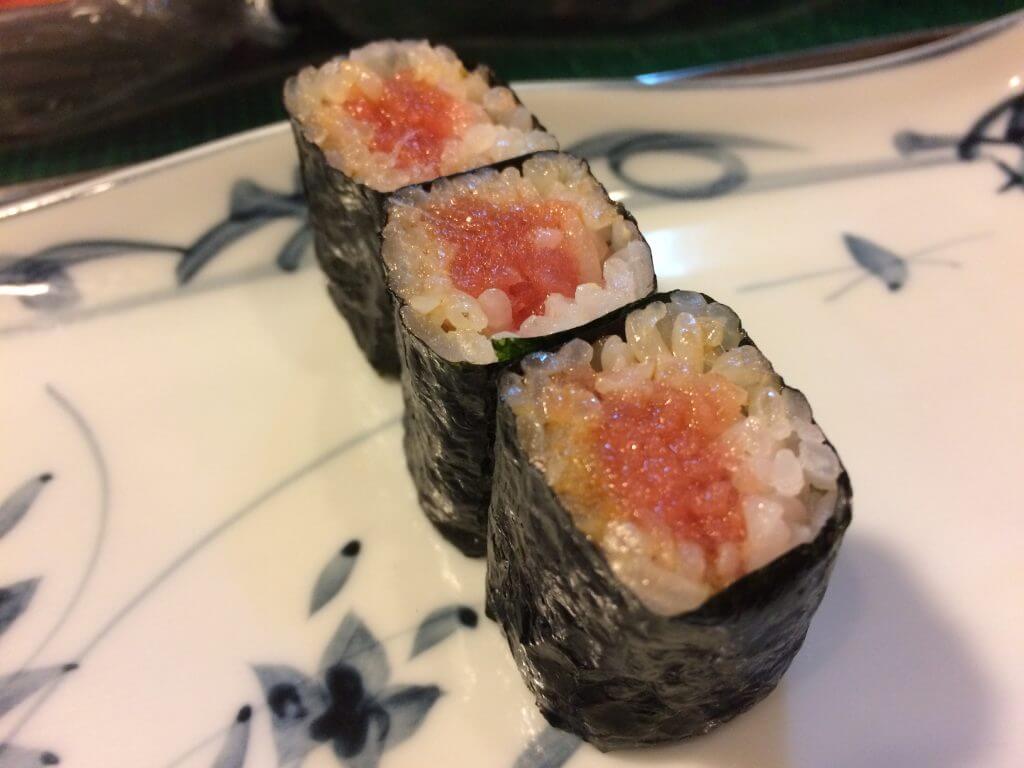 High quality negitoro uses the nakaochi of Pacific bluefin tuna or Southern bluefin tuna. Sometimes the green onion sprout is then rolled up inside. If you have a chance to try negitoro in Japan, we recommend you try the top quality options without a doubt. One piece will probably cost around $15 USD. But that’s the price for the real thing!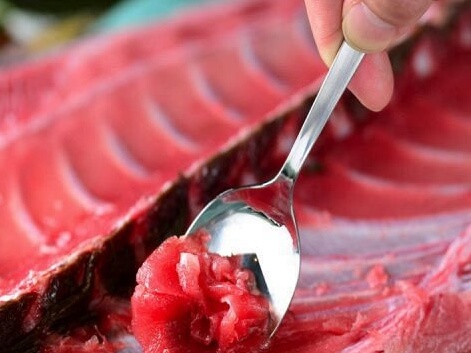
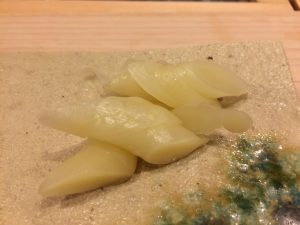 However, in certain prestigious restaurants where the gari is handmade, it does end up on the bill. This is because considering the time and ingredients that go into making the gari, the restaurant will be losing money if they don’t charge for it.
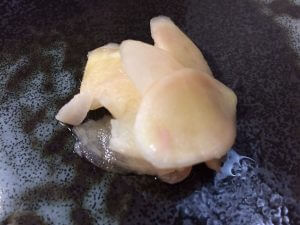 However, most sushi restaurants purchase their gari from companies that specialize in it. These mostly include pickling manufactures that have expanded to China or Southeast Asia and have factories there.