Foreword
How to read this book
History of Nigiri sushi
Classification of Nigiri sushi
1.AKAMI
1-1 Pacific bluefin tuna (Taiheiyou Kuro maguro)
1-1-1 Lean meat of tuna (Akami)
1-1-2 Medium Fatty Tuna (Chutoro)
1-1-3 Very Fatty Tuna (Otoro)
What is Harakami Ichiban?
1-1-4 Meji-maguro
1-1-5 Hachinomi
1-1-6 Kamatoro
1-1-7 Jabara
1-1-8 Chiai-gishi
1-1-9 Wakaremi
What is Hagashi?
1-1-10 Tossaki
1-1-11 Tenpa
1-1-12 Hohoniku
1-1-13 Sunazuri
1-2 Atlantic bluefin tuna (Taiseiyou Kuro maguro)
1-3 Southern bluefin tuna (Minami maguro)
1-4 Bigeye tuna (Mebachi maguro)
1-5 Yellowfin tuna (Kihada maguro)
1-6 Albacore Tuna (Binnaga maguro)
What are Meji, Chubou and Maguro?
1-7 Bonito (Katsuo)
1-8 Striped marlin (Makajiki)
The history of how toro sushi became a superstar!
2.SHIROMI
2-1 Atlantic salmon
2-2 Salmon trout
What is Toro salmon?
2-3 King salmon (Masunosuke)
2-4 Chum salmon (Tokishirazu)
2-5 Chum salmon (Keiji)
2-6 Cherry salmon (Sakuramasu)
Salmon is not used as a topping in Edomae sushi!
2-7 White horsehead (Shiro-amadai)
2-8 Horsehead (Aka-amadai)
2-9 Largehead hairtail (Tachiuo)
2-10 Large-eyed bream (Meichidai)
2-11 Splendid alfonsino (Kinmedai)
2-12 Red seabream (Madai)
What is Red Snapper the same as “Tai”?
2-13 Bastard halibut (Hirame)
2-14 Engawa
2-15 Marbled sole (Makogarei)
2-16 Spotted halibut (Hoshigarei)
How to tell the difference Between Buri, Hiramasa and Kanpachi
2-17 Greater amberjack (Kanpachi)
2-18 Japanese amberjack (Buri)
2-19 Young amberjack (Inada)
2-20 Goldstriped amberjack (Hiramasa)
2-21 Striped jack (Shima aji)
2-22 Japanese spanish mackerel (Sawara)
2-23 Japanese sea bass (Suzuki)
2-24 Chicken grunt (Isaki)
2-25 Filefish (Kawahagi)
When does Kinmedai taste the best?
2-26 Blackthroat seaperch (Nodoguro)
2-27 Tiger puffer (Torafugu)
2-28 Red spotted grouper (Kijihata)
2-29 Bartail flathead (Kochi)
2-30 Sevenband grouper (Hata)
What is Wasabi?
2-31 Longtooth grouper (Kue)
2-32 Japanese butterfish (Ebodai)
2-33 Red gurnard (Houbou)
2-34 Devil stinger (Okoze)
2-35 Green ling (Ainame)
2-36 Red barracuda (Kamasu)
How to use soy sauce under the watchful eye of a Sushi chef
2-37 Barred knifejaw (Ishidai)
2-38 Alaska codfish (Madara)
2-39 Black rockfish (Kurosoi)
2-40 Black seabream (Kurodai)
2-41 Bighand thornyhead (Kichiji)
2-42 Japanese bluefish (Mutsu)
How to Jukusei?
3.HIKARIMONO
3-1 Mackerel (Saba)
3-2 Horse mackerel (Aji)
3-3 Japanese sardine (Iwashi)
3-4 Japanese halfbeak (Sayori)
What is Tsukedai?
3-5 Pacific saury (Sanma)
3-6 Gizzard shad (Kohada)
3-7 Baby Gizzard shad (Shinko)
3-8 Young crimson sea bream (Kasugo)
3-9 Japanese whiting (Kisu)
3-10 Pacific herring (Nishin)
What are Uwami and Shitami?
4.NIMONO
4-1 Common orient clam (Nihamaguri)
4-2 Japanese conger (Anago)
4-3 Japanese eel (Unagi)
4-4 Squilla (Shako)
4-5 Japanese icefish (Shirauo)
Does the taste of wasabi differ depending on the grater?!
5.KAI
5-1 Ark shell (Akagai)
5-2 Japanese abalone (Kuro awabi)
5-3 Giant abalone (Madaka awabi)
5-4 Disk abalone (Megai awabi)
5-5 Ezo abalone (Ezo awabi)
5-6 Japanese egg cockle (Torigai)
5-7 Common scallop (Hotate)
What is Tezu?
5-8 Sakhalin surf clam (Hokkigai)
5-9 Japanese oyster (Kaki)
5-10 Keen’s gaper (Mirugai)
5-11 Round clam (Aoyagi)
5-12 Round clam ligaments (Kobashira)
5-13 Pen-shell (Tairagi)
5-14 Whelk (Tsubugai)
Why is sushi served with Gari?
Types of squid
6.IKA/TAKO
6-1 Bigfin reef squid (Aori ika)
6-2 Golden cuttlefish (Sumi ika)
6-3 Swordtip squid (Kensaki ika)
6-4 Spear squid (Yari ika)
Why is Nigiri sushi eaten with soy sauce?
6-5 Japanese common squid (Surume ika)
6-6 Baby Golden cuttlefish (Shin ika)
6-7 Firefly squid (Hotaru ika)
6-8 North pacific giant octopus (Mizudako)
6-9 Common octopus (Madako)
What is Sute-shari?
7.EBI/KANI
7-1 Kuruma prawn (Kuruma ebi)
7-2 Botan shrimp (Botan ebi)
7-3 Morotoge shrimp (Shima ebi)
7-4 Sweet shrimp (Ama ebi)
Learn the basics of pairing sake with sushi!
7-5 Broad velvet shrimp (Shiro ebi)
7-6 Snow crab (Zuwaigani)
7-7 Horsehair crab (Kegani)
Why did the vinegar used in shari switch from red vinegar to rice vinegar?
8.GYORAN
8-1 Salmon roe (Ikura)
8-2 Herring roe (kazunoko)
8-3 Green sea urchin (Bafun uni)
8-4 Red sea urchin (Aka uni)
Why is it that sea urchin sushi can taste bitter?
8-5 Purple sea urchin (Murasaki uni)
8-6 Short-spined sea urchin (Ezobafun uni)
Hokkaido’s main Ezobafun uni production area
8-7 Northern sea urchin (Kitamurasaki uni)
Hokkaido’s main Kitamurasaki uni production area
8-8 Herring spawn on kelp (Komochi kombu)
The secret story of how Ikura became a sushi topping!
9.OTHERS
9-1 Young Green Onion Shoots (Menegi)
9-2 Shiitake mushroom (Shiitake)
9-3 Daggertooth pike conger (Hamo)
What tea pairs well with Nigiri sushi?
9-4 Oboro
9-5 Monkfish liver (Ankimo)
9-6 Milt (Shirako)
9-7 Omelette (Tamagoyaki)
Does real Edomae sushi no longer exist!?
10.MAKIMONO
10-1 Dried Gourd Shavings Sushi Roll (Kanpyo maki)
What is Kanpyo?
10-2 Tuna Roll (Tekka maki)
10-3 Cucumber roll (Kappa maki)
What is Okonomi?
Sushi Restaurant Etiquette
Sushi Vocabulary and Jargon
Afterword
References
Cooperating sushi restaurant for photography
Copyright
 Buy now
 Travelers’ health and safety have always been our priority and today, the focus on public health and hygiene is fundamental to the recovery of our industry.
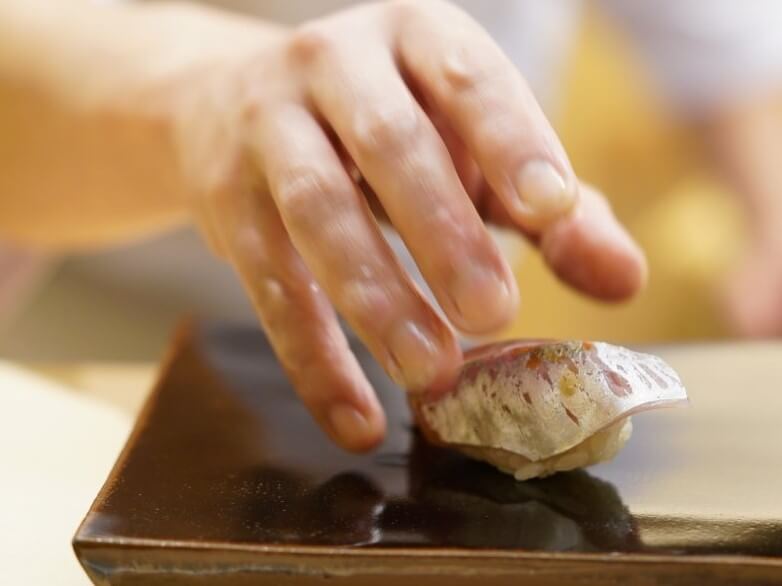 Even Japanese people can be overwhelmed by the somehow special atmosphere when they sit down at the sushi counter. This continues even when starting to eat. Other customers are concentrating on eating, quietly. You kind of get the feeling that if you utter anything, you will be asked to leave. If you don’t end up mustering up the courage, you just end up paying the high price for your meal and going home without much more to say of the evening.
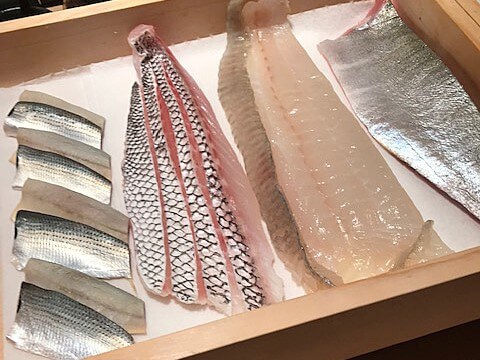 The customer ends up not remembering which fish they ate. For example there are very few people who can name the order of the 15-piece Omakase course they ate. You may be sure you ate tuna. But where was it caught? Was it the belly side or the back side? How long had the fish been matured? To be a bit more frank, how much did it cost? If you ask the chef these questions, next time you visit, you’ll be able to compare different taste based on the fishing location. Knowing the difference in taste based on the part of the fish, and difference in flavor depending on where it was procured, and different taste depending on the preparations will certainly improve your sushi literacy remarkably. It will also lead to a better awareness of your own taste preferences.
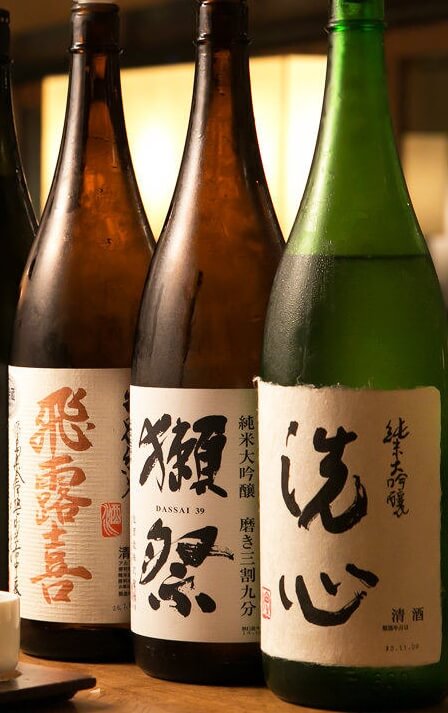 There is a theory that when pairing Japanese sake with cuisine, the two should complement each other. This means that one should complement the shortcomings of the other, and thus a harmony is achieved with the compatibility of the two pieces.
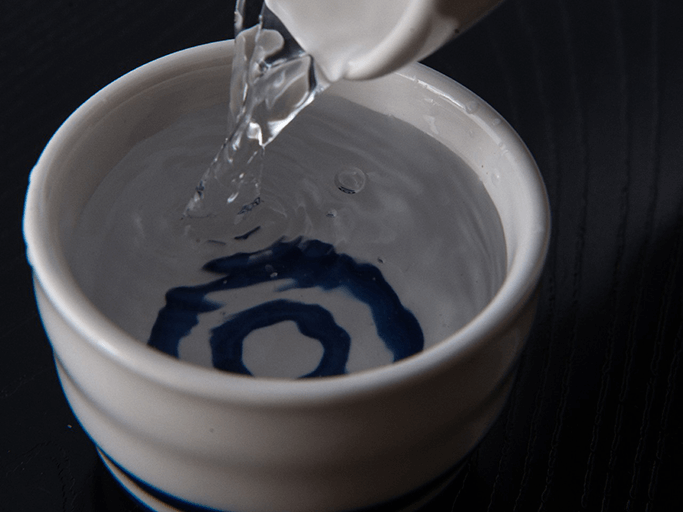 First, you should ask for a small amount of Junmaishu and Ginjoshu (or Junmai-Ginjoshu) recommended by your sushi chef. See the sensation they create in your mouth, whether there is a sweetness or a dryness, and note the fragrance and acidity. Immediately after eating a piece of sushi, try tasting the sake. Your impression may change a lot when paired with the sushi compared to the first sip. This is the true pleasure of pairing sushi and sake.
 The other day I had a very interesting guest at Sushi University from America. I’d like to introduce them to you. It was their first time in Japan and they stayed in Tokyo for a week. They planned to see Asakusa, the Shibuya scramble crossing, Meiji Shrine, the robot restaurant and all the other usual tourist sites. However, the conversation all seemed to be focused on food.