Ending a fish’s life without stress is the key to the delicious flavor. When fish are left out in air, and die in agony it promotes rapid Adenosine triphosphate (ATP) degradation and increases in Inosinic acid. This is the worst way to kill a fish.
So what method can control the fish’s flavor or “umami”?
The delicious flavor of fish comes from the postmortem breakdown of ATP, which is the source of biological energy, and the generation of Inosinic acid, which is the component of the umami. Rigor mortis after the fish has died, progresses with the decomposition of ATP. When the oxygen supply is cut off after death, the energy required for muscles to move is no longer supplied, so the flexibility of the muscles is lost and the body starts to contract. This is postmortem rigidity. This state depends on the fish, but it is the lowest point for flavor and after that, the fish is managed at an appropriate temperature to increase the Inosinic acid.
This method has been the norm among sushi chefs who didn’t know about the mechanism that produces umami. Since long ago, the daily routine was to purchase fish that were killed first thing in the morning in the market, then increase the umami by keeping the fish in a refrigerator with a controlled temperature for 12 to 48 hours. Nowadays, the method has become a common practice among fisherman, distributors and fish handlers at the market.
Now I will explain a number of methods that maintain peak flavor.
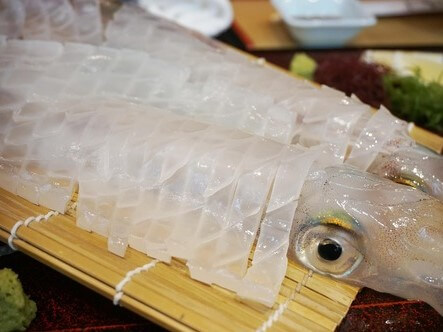 Ikezukuri means to take a fish that’s swimming in a tank at the restaurant, and immediately making sashimi after killing it, while the meat is still super fresh. In this state, there is no Inosinic acid, but there is quite a show with movement still in the fish and this preparation method gives the best-tasting texture.
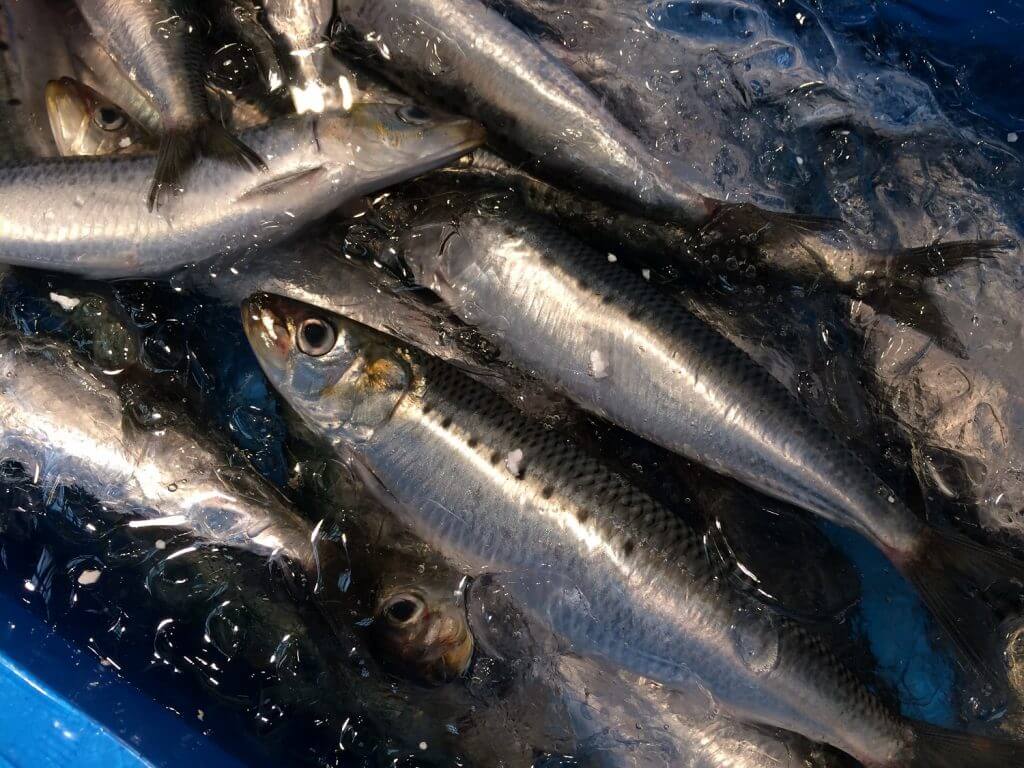 Nojime* means using a massive amount of ice to suddenly reduce the temperature, resulting in the death of the fish, either at the fishing site or at the local market. This method is used for small, cheaper mass-market fish that are caught in large amounts. Nojime starts with a reverse calculation for flavor from the day after fishing, but if the process isn’t thorough or there are any deficiencies, the fish won’t stay as fresh, so detailed care must be taken in temperature management.
Hamajime* means to cut the spinal cord at the production site, drain blood and spinal fluid, then pack in ice from the afternoon the next day and wait for the peak flavor, which will be about two days later. That’s when the seafood is shipped to make it to the consumer auction the next day. As time passes, inosinic acid is generated and the aim is to use the fish in sushi at peak flavor.
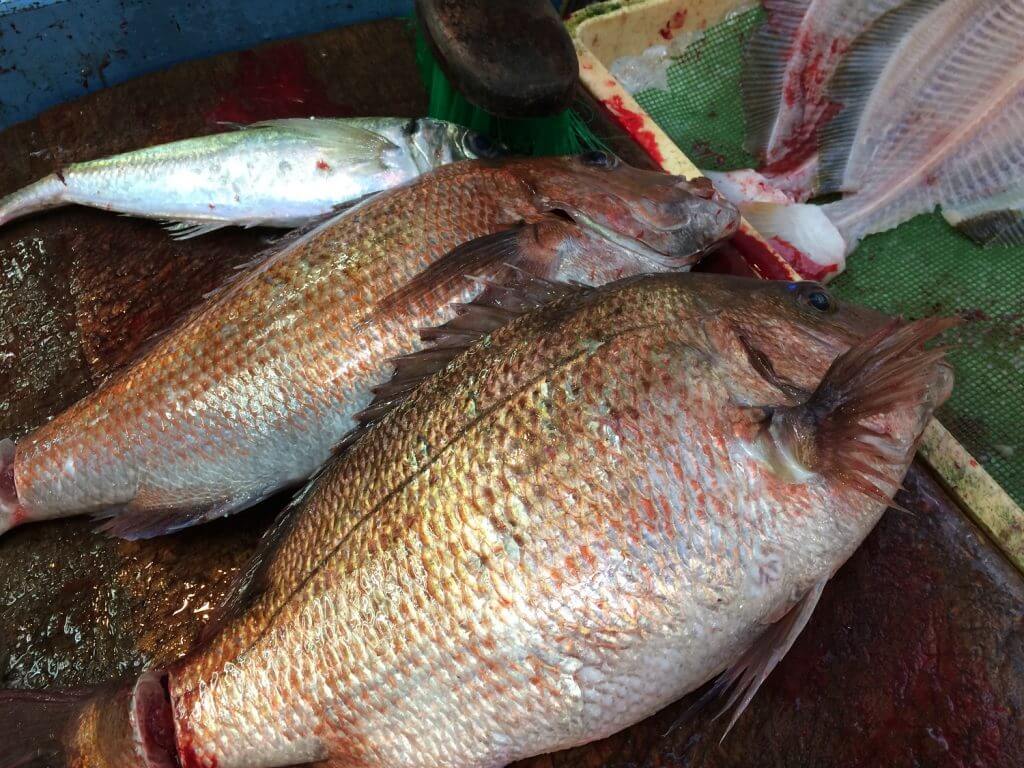 Ikejime is used so that the peak flavor will be reached during afternoon and evening business hours. The spinal cord of the live fish is cut and spinal fluid drained at the early morning market. This result is a firmness from the remaining ATP, and delicious flavor from the Inosinic acid that is generated as time passes. After some time has passed, even fish for which Ikejime is applied, can reach the same state as Hamajime if used after being refrigerated for one to two days, in order to maximize the Inosinic acid generated. Of course, sushi chefs find their own balance of firmness in meat or added flavor, and incorporate this balance for the optimum combination with their shari in each piece of sushi.
Finally, maintaining freshness by using Ikejime, has become common practice overseas, and the term “Ikejime” has also become standard among the fishing industry. There are many websites that go into further detail on Ikejime, which you can reference from the links below.
*At markets in Japan, the term “kill” is not used for living fish, instead the word “shimeru” meaning “close” or “tighten” is used. This expression is thought to have come from the sentiment of showing respect and appreciation for all living beings, not only humans.
TYPES OF EDO-STYLE PREPARATIONS
Related Contents
http://fr.gaultmillau.com/news/premiere-poissonnerie-ikejime-a-paris
https://elisabethscotto.com/2016/02/27/ikejime/
https://guide.michelin.com/sg/en/article/dining-out/what-is-ike-jime
https://www.1843magazine.com/food-drink/ikejime-a-humane-way-to-kill-fish-that-makes-them-tastier
We hope this information will be helpful.

Revision date: May 1, 2020