In order to prosper, a business wants to sell products at as high a price as possible. So how does a chef determine the price of nigiri sushi?
 Naturally, the cost price is what it costs the restaurant for the ingredients while the price on the menu is the selling price. The ratio of these two prices is called the cost rate. In the case of a sushi restaurant, the ideal cost rate is 35% or less. A restaurant operating with only Omakase will have a cost rate of 40% with a focus on the quality of the toppings.
For sushi restaurants, handling of this ratio and the yield are very important. Yield refers to the part of the purchased fish and shellfish that can actually be used. For example, when purchasing a whole fish there are bones, skin, eyes, tail and internal organs that cannot be served as sushi or sashimi. No matter how good a chef is when preparing fish, the bones and skin will remain. In other words, the yield rate is the percentage of parts that can be used as sushi or sashimi. Typical fish yield rates are as follows:
Wild Maguro (Tuna): 65~75%
Buri (Japanese amberjack): 50%
Hirame (Bastard halibut): 40%
Tai (Red seabream): 35%
Akagai (Ark shell): 25%
Mirugai (Keen’s gaper): 20%
The weight of just the topping for a single piece of nigiri sushi is 12 to 18 grams, depending on the ingredients and the policy of the restaurant. The market price for rice is said to be about US$5 per kilogram, and assuming a weight of 15 grams per Nigiri, the rice for a piece of sushi is generally said to cost about US$0.05, including vinegar and salt. Even if you count the shari (sushi rice), soy sauce, wasabi, nori, etc., it’s fair to consider the cost to be about US$0.10.
Now, let’s figure out the price of Hirame, for which 3 kilograms were bought at $60 per kilogram. Assume that the weight of one topping is 15 grams.
The yield rate of Hirame is 40%, so the chef can make 1,200 grams of sushi toppings from 3,000 grams of Hirame. (formula: 3000 g × 0.4 = 1200 g). Since the weight of one topping is 15 grams, 80 pieces of sushi can be made from 3,000 grams of Hirame (1200 g ÷ 15 g = 80 pieces).
Next, we calculate the cost of one topping. Hirame is US$60 per kilogram, so US$180 (US$60×3 = US$180) for 3 kilogram. Since this volume can yield 80 pieces, the cost of one topping is US$2.25 (US$180÷ 80 pieces = US$2.25).
Add the shari price of US$0.10 to this: US$2.25+0.1=US$2.35. In other words, the cost of one Hirame nigiri sushi is US$2.35.
If the ideal cost ratio of 35% is applied here we get 2.35÷0.35 (35%) = US$6.71. For a restaurant serving mainly Omakase, 2.35÷0.4 = US$5.88.
In summary, one piece of Hirame sushi is sold between $5.88 and $6.71.
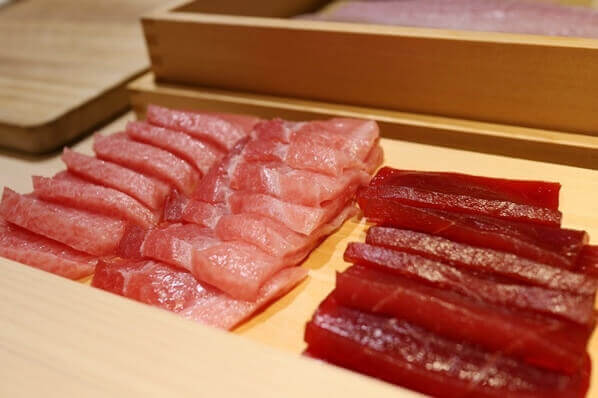
It may feel surprisingly cheap, but if you perform these calculations with Kuromaguro or Uni, it will be $60 to $90 per piece, and then you’ll feel that it is too expensive. Therefore, the total margin is secured by setting the cost rate for Kuromaguro and Uni to 80-90%, while the cost rate for Saba and Ika is set to 10-20%.
We hope this information will be helpful.

Revision date: January 6, 2022
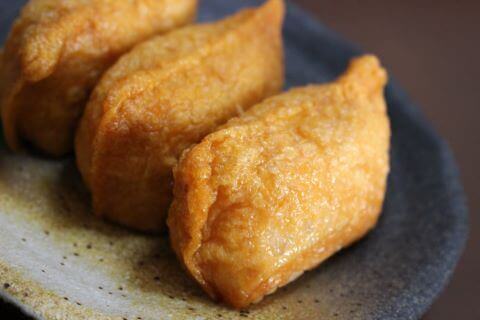 First of all, sushi rice made for Inarizushi can be used for a wide variety of uses including Uramaki and Chirashizushi, so it could be useful to learn. However, the recipe is slightly different than Nigiri sushi. The reason is that in the case of Nigiri sushi, the topping is typically one type of seafood combined with a sushi rice recipe that maximizes the flavor of that seafood. On the other hand, Inarizushi, Uramaki, etc., are filled with optional ingredients put together to enjoy multiple layers of flavors spread in your mouth. The sushi rice is essential to harmonize all the ingredients. Therefore, it is made with more sugar than Nigiri sushi. In addition to toning down the sourness of Vinegar, the sugar’s own richness works to bring out a mellow taste. Kombu is also added to the rice while it is cooking. The aim here is to create a synergy between the Inosinic acid contained in Kombu and the Umami of the other ingredients.
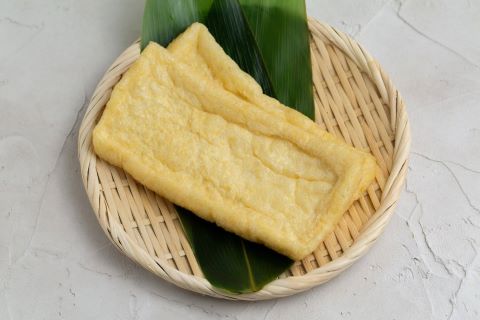 ① Spread the deep-fried tofu on a cutting board and roll it out with a rolling pin until it is completely flat. This helps to loosen the inside of the deep fried tofu so it will open easier. It might seem like a hassle, but it will help you make Inarizushi that looks even better.
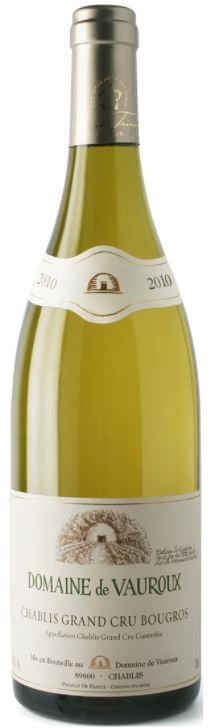 For example, every Frenchman knows that
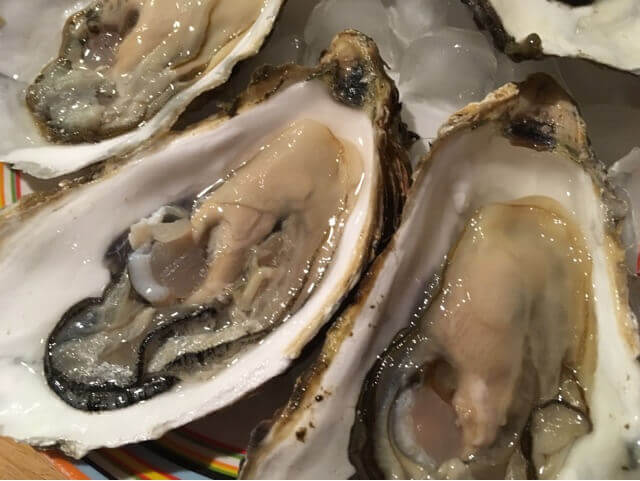
 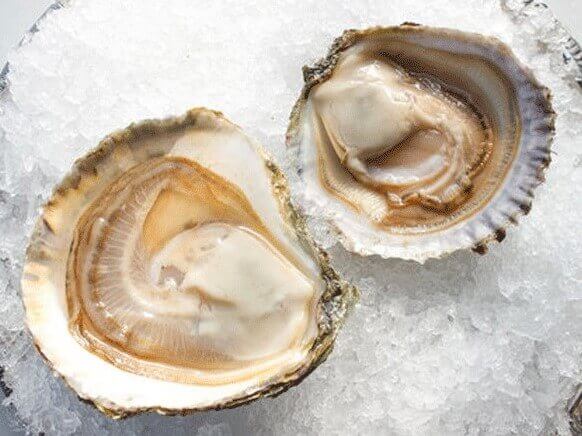 Famous for its Belon brand name, the oyster native to Europe has a flat, rounded shell. It belongs to the genus Ostrea. To be honest, Belon oysters aren’t sweet and don’t have a distinguished flavor compared to Japanese oysters, and the salty fragrance of the sea is dulled, so it can seem less flavorful.