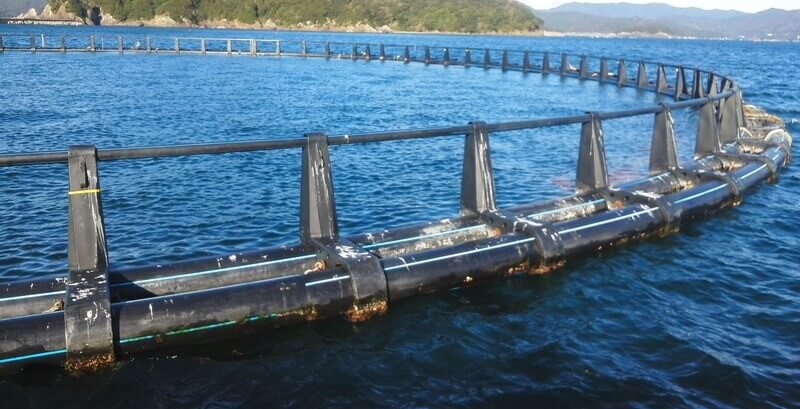
 While high-quality tuna toro used to be unattainable for normal people, it’s now become a much more affordable item. This is thanks to fish fattening practices of the southern bluefin tuna, which is equivalent in quality to the Pacific bluefin tuna. The fattening method of catching young southern bluefin tuna in roll nets or something similar, and then keeping them in fish preserves until they grow big enough was developed in the 1990s in Australia.
There have been changes in the Pacific bluefin tuna as well. In the late 1990s, the southern bluefin tuna fish fattening method started to be used in the seas throughout the world, and this led to the fattening of the Pacific bluefin tuna, which became all the rage. Most of these are exported to Japan, and account for about half of the consumption of southern bluefin tuna and Pacific bluefin tuna in Japan.
As a bonus, tuna that has been fattened in this way has such a high volume of fat that it is said to be “all toro”, and it’s taken the Japan high-grade toro market by storm. Also, both southern bluefin tuna and Pacific bluefin tuna are served at kaiten-zushi (conveyor belt sushi) restaurants.
The fattening of Pacific bluefin tuna started on the east coast of Canada in the mid-seventies. In the summer, large volumes of Pacific bluefin tuna are caught in the fixed shore nets on the Atlantic seaboard, and since they have already spawned, they have slimmed down and aren’t worth much commercially. These fish are fed and fattened, and a new route to Japan has been developed, giving the fish new commercial value.
Both fish fattening and fish farming mean to hold fish in fish preserves, but the purpose differs between the two. The purpose of fish fattening is an adjustment for fishing while the purpose of fish farming is to grow fish to a certain size. Therefore, in fish fattening, they are not fed food to promote growth, but they are in fish farming. However, even in fish fattening, if the period of time they are held for shipping adjustment stretches out too long, they are fed in order to prevent a decrease in meat quality and cannibalism. This can blur the line between fish fattening and fish farming quite a bit.
The Pacific bluefin tuna fish fattening started in Canada is similarly vague. In that case, the purpose was fattening, so it may be fair to call it fish farming. However, shipping adjustment was also one of the major objectives. What about the fish fattening of southern bluefin tuna and Pacific bluefin tuna in Australia and the Mediterranean Sea? These are in place clearly for the purpose of growing small fish, so we can call them fish farming.
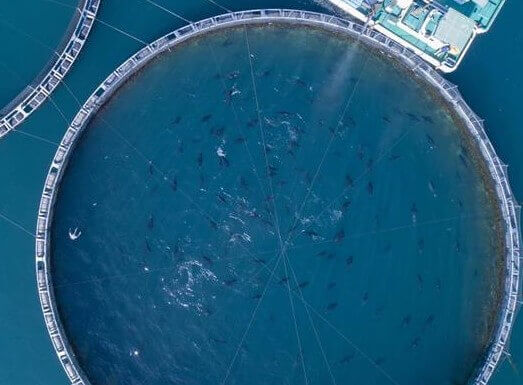 The Kindai University Aquaculture Research Institute has succeeded in a complete farming process of taking eggs from spawning Pacific bluefin tuna, incubating them and raising adult fish. Research for a complete farming process began around 1970, so it has taken 30 years for success. These fully farmed tuna are also raised in fish preserves and fed small fish like sardines as well as artificial feed for fattening, resulting in all-toro tuna. However, even though the Kindai University tuna have been featured by the media, you never see them in the supermarket. Why is that? Even though the university has succeeded in a mass-production method, the absolute quantity is extremely low even though raising the fish takes a lot of time and effort, so the price is extremely high.
Whether they are fattened, farmed, or fished in the wild, consumers always welcome delicious, high-quality toro at a reasonable price.
We hope this information will be helpful.

Revision date: December 1, 2020
good article, my advice is to add more pictures or videos for readers
We will use it as a reference.Thank you so much.